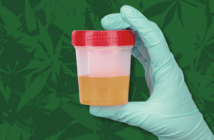
 Photo by Thomas AndersonThe B.C. Civil Liberties Association has raised serious concerns on behalf of 3,000 injured B.C. drivers whose blood will be tested for marijuana without their knowledge for a $1-million study on drugs and driving.
In a marijuana-impairment study announced last month, excess blood that is drawn in the course of treating injuries will be analyzed. The blood is collected anonymously and not used in relation to criminal charges.
However, BCCLA policy director Micheal Vonn questions how such data can be rendered anonymous, as assured by researchers who have met waiver of consent standards of major research organizations and had the approval of each of the five hospitals involved, including Nanaimo Regional.
“I would be interested to know how the toxicology results become incapable of being traced,” she said. “If the study is to examine the relationship between drugimpairment and automobile accidents, then you have to link the two somehow. If the master list is destroyed before the blood is analyzed, then presumably they are coding it somehow, because they need to know what they are analyzing.”
She is also concerned that patients worrying that blood-test results might lead to criminal charges, however remote, may contravene the “do no harm” underpinning of all ethical research.
The Canadian Institute of Health Research, which is funding the study, the National Sciences and Engineering Research Council of Canada and the Social Sciences and Humanities Research Council of Canada have all signed off that ethical standards have been met.
Vonn contends the issue is not that the study meets with ethical approval – “the issue is what was approved.”
The study will analyze patients’ blood “taken in relation to treatment for injuries” and will not be connected to criminal charges, insists co-investigator Scott Macdonald, a population health expert at the Centre for Addictions Research of B.C. at the University of Victoria.
“All data is completely anonymized [i.e. the master list to link samples is destroyed] before blood is analyzed and toxicology results are not shared by police – in fact, our methods ensure that toxicology results cannot be traced back to the driver [not even by the investigators],” he said.
The study is aimed at defining whether drivers high on pot cause more accidents than sober drivers and that requires thousands of tests to get a representative sample of drivers.
If pot smokers in car accidents were asked for consent, they’d likely refuse requests for blood samples, skewing the necessary random aspect of the massive study, Macdonald said. “The steps taken to ensure anonymity are unlikely to adversely affect the wel-fare of the subjects.”
“No one is suggesting that the researchers are voluntarily sharing the toxicology results with police – such an action would be an already-established breach of charter rights of the patient,” Vonn added. “The question is police getting a warrant later.” She can’t understand how it could be determined that a driver caused an accident “without a linkage to the police report.”
The issue highlights the balance between the individual right to informed consent and the public interest of keeping roads safe from drivers under the influence of drugs.
“There’s never been a good study,” Macdonald said. “It’s got to be blood.”
Blood tests are necessary to reveal the potency of any THC – the active ingredient in marijuana – while urine tests detect merely the presence of pot in the system, even if smoked a month prior, he pointed out. Saliva tests indicate pot smoked in the previous 34 hours. “Neither approach can show impairment or amount of drug used,” he says.
It’s crucial information for authorities aiming at “an effective road-safety policy targeting cannabis-impaired driving,” says the study’s lead investigator Dr. Jeffrey Brubacher in the latest issue of the B.C.
Medical Journal.
The rate of cannabis use by B.C. drivers is “particularly high,” Brubacher writes.
A 2008 survey of the Island and Lower Mainland found that 8.1 per cent of drivers had been drinking and 10.4 per cent tested positive for drugs – including 4.6 per cent for cannabis.
“However, many cannabis users believe it does not impair their driving ability,” Brubacher adds, even though he says the evidence is clear that pot, like alcohol, slows reaction time and impairs staying within lanes or monitoring speed. Unlike alcohol, pot does not affect complex functions such as interpretation and anticipation of traffic patterns, he adds.
B.C. Coroners statistics from 2008 show 133 vehicle deaths, with alcohol involved in 76 of them, drugs in 19 and a combination of them in 38. But pot pales beside the vehicle deaths caused by alcohol, Macdonald stresses. “Alcohol is by far the worst drug on the road.” Currently, there are roughly two immediate roadside suspensions per month in Greater Victoria related to drug impairment, compared to at least five times that many roadside suspensions for alcohol, says Const. Bill Roberts of the Victoria Police Department.
Roberts, provincial co-ordinator for the drug evaluation classification program, welcomes the study, saying it will give police and the community a better understanding of the increasing challenge of drugs when it comes to impaired driving. “We’re finding it more and more prevalent.”
– Article from The Victoria Times Colonist.