If your browser does not support TABLES click here.

Dutch drug policy has its roots in tolerance and is
evolving into an organized and regulated system.
| by Sander de Jong |
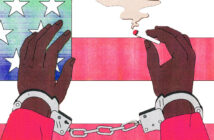
 In the early seventies the Dutch government decided to make a distinction between the so-called soft and hard drugs, and so they added an A and a B list to the somewhat outdated Opium Law. The categories have never been very clearly delineated, but marijuana has always been on the B list. This was a legal construction which was only the beginning of a body of law that has grown increasingly more complex, (even to the point of self-contradiction), but which has nevertheless provided considerable freedom to Dutch nationals. This freedom has always been very dependent upon a police force that is not so much tolerant, but rather pragmatically absent when it comes to interfering with the general public.
|
|
 In the eighties, a new generation got acquainted with a drug that was quite readily available, yet still surrounded with the slight haze of mystery and illegality. Not that everybody suddenly started to use it, but the officials got a little bit nervous nevertheless. Recently, after more than fifteen years of legal insecurity, they produced a policy, known as the ‘AHOJ‘ policy. It entails that Alcohol cannot be served in a softshop, the use and selling of Harddrugs are forbidden, public Order must be maintained, and finally that no youths under sixteen are allowed into a softshop (the ‘J‘ is for ‘Jeugd‘, the dutch word for youth). At first sight this seems reasonable and clear, but alas it is not so.
|
 The retailers pay taxes in an odd way so that the tax service can avoid getting involved with criminal activities. They are taxed for the legal business they do, and they get a fine that stands in a linear relation with this legal turnover to pay for the marijuana they sell. As long as they pay these pseudo-taxes and abide with the AHOJ policy they will generally be left in peace. Unless, of course, some policeman or other government official has a personal grudge against a retailer.
|
|
 Growing has also become quite popular, but generally only for oneself and relatives. Some have attempted it on a much larger scale so as to draw the attention of the wicked, wicked legislator, who in his supreme wisdom has decided that we are only allowed five plants each (not six, not four, but five). Still, the growers are well off compared to the importers and the distributors, because within this hybrid system they take all the risk, all the blame, and, of course, most of the cash if they do make it. They generally do succeed, which is not surprising if you consider the crazy fact that the government is actually helping them to get get rid of their black money with a system in which there is a legal market and a large grey circuit to provide that market.
|
 Well, there’s a number of reasons why it’s not as easy as that. First, there is the problem that drug trafficking is generally an international affair. The Netherlands have long been the only country in the world with such a pseudo-liberal drug policy, and the government has always felt that allowing importers to do their business could severely upset the countries of origin. However, I find this to be a weak argument, because those countries generally don’t care, could use the money, and what we call “drugs” is usually part of thousands of years of tradition and culture back where it comes from, at least in its unrefined form.
|
|
 Does this mean that there are no problems with drugs in the Netherlands? No, it does not, though this is mainly because our policy is very much a halfway measure, with all its accompanying problems. But what does the future hold?
|
| Have this magazine delivered right to your door. Printed on hemp paper. |  |
 |
Have anything you’d like to add? |