
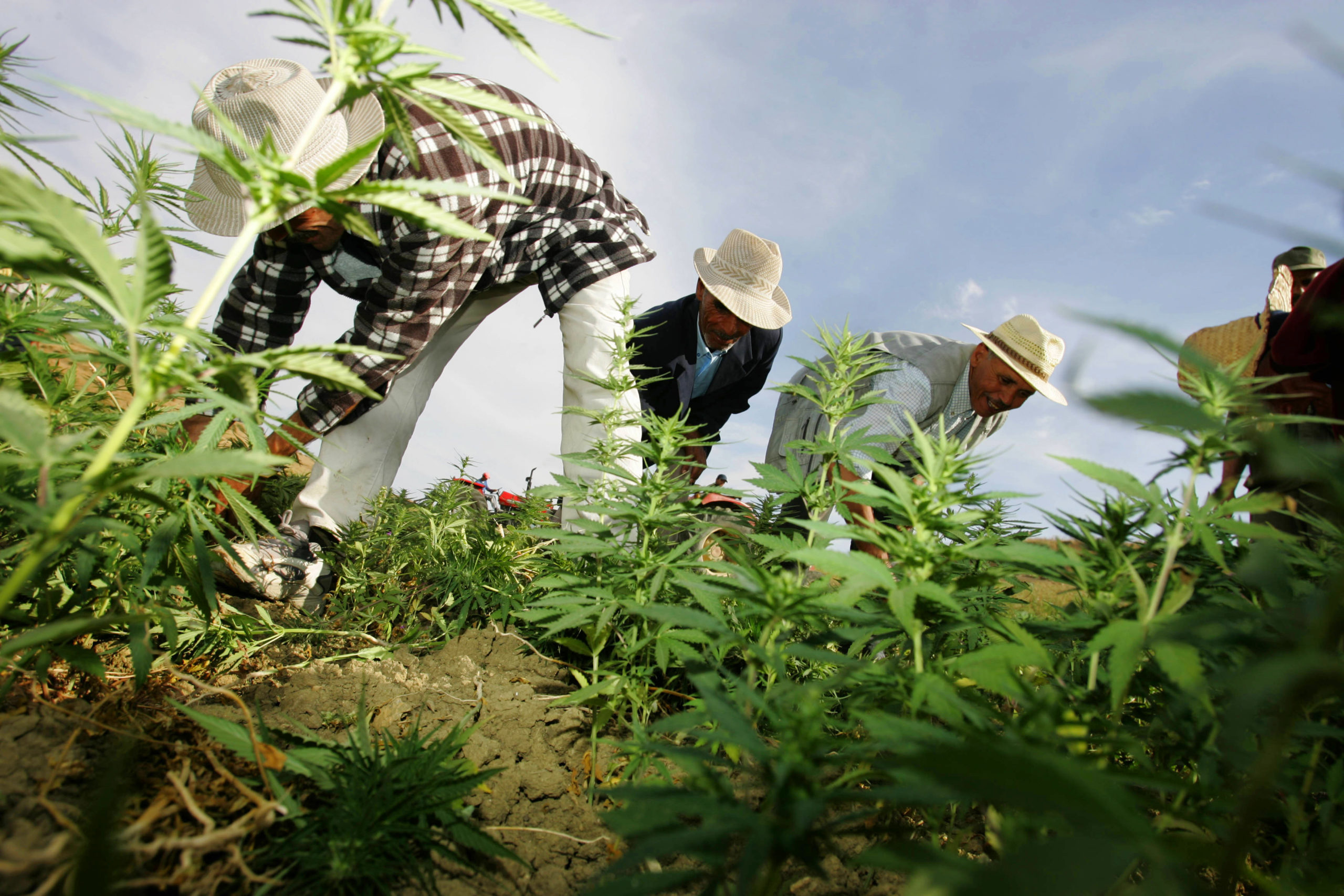
CANNABIS CULTURE – The biggest single medical cannabis export in history was staged from Africa in 2021. Now, the African continent’s cannabis market is predicted to generate more than the $7bn mark.
The burgeoning industry in Africa (often restricted to simple cultivation where legalization is available) is set to break new ground in 2022 when the continent dabbles with manufacturing and exporting cannabinoid pharmaceuticals ingredients that are used in therapeutic medicines and wellness supplements.
With a rising demand for single-molecule cannabinoids in the UK, Australia, the US, and Israel, says Sibusiso Xaba, an investment banker and co-founder of The ACA Group, an advisory firm focused on the African cannabis market.
“However, the majority of pharmaceutical cannabinoid products available today are clinically examined by the US Food and Drug Administration leaving African cannabis labs and companies facing an uphill battle to be certified. This should not hinder Africa because, for the first time, key outbound markets like the UK are allowing medical cannabis to list on the stock exchanges,” Xaba says.
Obstacle so far?
Until now, Africa´s shift into exporting high-value cannabinoid pharmaceuticals has been hampered by lack of access to specialist Good Manufacturing Practice (GMP) approved manufacturing laboratories licensed to export scheduled narcotic extracts and thus allow growers to turn their cannabinoid biomass into the highest global standard.
Xaba adds that there is not yet sophisticated legislation across many African to make the distinction between cannabis and ingredients of cannabis. “Let´s say a company from South Africa wished to sell CBD lotion or oil that doesn’t contain TCH, the law would lump the products into one straight jacket: a medicine that carries cannabis which is essentially a controlled substance even though the cosmetic products don’t carry psychoactive products.
“Hence it is still a big battle across Africa to convince officials that I want to put cannabinoids through a clinical project. The laws across Africa still have a “lump-all” definition of cannabis as a controlled substance,” adds Xaba.
On top of that, the African cannabinoid producer market is thinly concentrated around five countries out of 52, and its value totals only $5,470mn according to a report by Prohibition Partners versus the $7bn potential that Africa could reach in 2023.
So, who is leading the shift?
Cannabinoids startup in Africa has seen an opportunity among the difficulty. The likes of GESlabs, a small innovation company in Cape Town, South Africa, is leading the pack, after securing one of Africa´s first licenses to extract, manufacture and export narcotic ingredients used in therapeutic medicines using carefully cultivated biomass.
“We want in South Africa to lead a space where we distinguish between raw cannabis, which is well known and highly promoted, and cannabinoids which are lesser-known but lucrative pharmaceuticals,” says Peter William Nel, the managing director.
The global cannabinoids market is expanding fast as the wellness properties of cannabis continue to draw millions across conventional healthcare. “Cannabinoids are the next lucrative market and probably still undervalued,” adds Nel, pointing to the US cannabinoids market which was valued at $2, 3 bn in 2019.
“Pharmaceuticals, this is where Africa needs to accelerate and set pacesetter advantage. The business of simply growing and harvesting cannabis is not going to be eternally lucrative as more grower countries in South America, Canada, Asia use high-grade yields and technology to flood the market with farm produce.”
Africa´s advantage?
Countries like South Africa have some of the world´s best warm climates suitable for growing high-spec medical cannabis, and the existence of unlicensed small-time cannabis growers who can be brought into the light and linked with domestic pharmaceutical labs and corporations to satisfy domestic demand.
“Low labor costs, lots of natural-occurring water, and excellent sunshine is Africa´s best tool to accelerate in the high-grade cannabis sector,” says Mark Corbett, a cannabis entrepreneur in Lesotho who previously spent a decade building global distribution for the skincare brand Bio-Oil.
“The best outdoor temperatures for high-quality cannabis is 60 Fahrenheit. This is the nice temperatures available in upcoming African cannabis powerhouse countries like South Africa and Swaziland.”
Last December, a milestone was achieved when then Canadian firm Instadose Pharma Corp shipped a record 2, 125 tons of medical cannabis from South Africa to North Macedonia. According to g to the company: “This was the largest international cannabis shipment in history.” The product was destined for cannabis-pharmaceutical clients across the European Union.
“With this shipment, you don´t need rocket science to know that if the right systems are in place, Africa is the next powerhouse in the medical-grade cannabis trade. 2022 could be that year,” says Shamiso Mupara, an independent ecologist in Zimbabwe who attended the COP2021 meeting in Scotland.
The Intadose shipment comes in the heels of another gigantic shipment of 2000kg of THC and 6500kg of CBD flower trim from Lesotho by Highlands Investments in August.
“What needs to happen quickly in 2022 is that the medical cannabis industry in Africa needs to be broken up so that it is widely dispersed across several countries to guard against weather disasters or legal disruptions. So far, the bulk of producer countries supplying cannabinoids are just Nigeria, South Africa, Morocco, Lesotho, and Zimbabwe out of 52 countries. This is unhealthy,” adds Shamiso the ecologist.
The interesting dilemma is that cannabis is not significantly imported into Africa because the continent has always had an irregular avalanche of small-time domestic growers flying under the table, says Shamiso.
“This is bad and good as we start 2022,” says Shamiso. “It means in Africa we still have a significant chunk of historical, unlicensed cannabis growers who are not aware of the pharmaceutical ingredients that could be extracted from weed. When growers are busy hiding from the law, they forget the precious pharmaceutical ingredients that can be extracted from cannabis growing in their backdoor garage.
On the other hand, this is good in that whilst high-grade commercial cannabis can be exported to European and North American pharmaceutical clients and earn billions in desperately need foreign currency, what remains, unlicensed small-time cannabis growers in Africa can be co-opted and linked to domestic pharmaceutical cannabinoids laboratories and corporations.”

