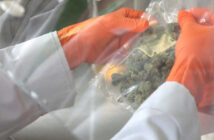
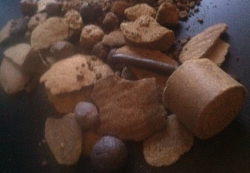
 Marijuana-infused cookies, oils, and tinctures would be banned from San Francisco medical marijuana dispensaries along with concentrated forms of cannabis like hashish and kief under new rules proposed by the Department of Public Health.
In a memo released to several dispensaries under the heading “Medical Cannabis Edibles Advisory,” DPH — the city department which regulates San Francisco’s 21 medical cannabis dispensaries — recommends pot clubs “do not produce or dispense syrups, capsules, or other extracts that either required [sic]concentrating cannabis active ingredients or that requires a chemical production process.”
There’s no enforcement mechanism and is not a “ban,” a DPH spokeswoman told SF Weekly. But it’s nonetheless problematic — for dispensaries which would need to remove many edible products from their shelves as well as hashes and kiefs in order to be playing by the rules. It would also be problematic for medical pot users, many of whom say concentrated cannabis is their preferred or only way to glean marijuana’s health benefits.
For the uninitiated, marijuana can take many forms. The “buds” one sees are dried flowers; those flowers can be ground up and the plant material removed via several processes to create a concentrate like hash or kief. The dose is much stronger, and if smoked or vaporized, is arguably healthier because less plant material is combusted (a hit will be 50 percent active ingredients or more as opposed to closer to 10 to15 percent).
Some people can’t smoke or vaporize due to lung issues, and instead sprinkle kief in hot cocoa, or eat cookies baked from hash, according to David Goldman, a patient advocate with Americans for Safe Access.
Patients in hospice care have taken to using “vapor pens” in which a small amount of concentrated cannabis is administered in a device not unlike an “e-cigarette,” according to Erich Pearson, executive director of dispensary SPARC on Mission Street.
That said, concentrated cannabis can lead to problems — the Ingleside apartment explosion which injured a 12-year old boy occurred when the occupants were allegedly using butane to make hash oil, according to reports. It’s worth mentioning using chemical solvents like butane to make hash is already illegal under state law; methods using water and carbon dioxide gas are both safer and both legal.
The memo in question purports to deal more with medical marijuana edibles, which means any orally consumed medical marijuana product, from a brownie to a cough drop and a tincture or a tea. “To avoid potential hazards associated with edibles, pending the development of a statewide regulatory approach, the Department recommends medical cannabis and collectives … limit the production of medical cannabis edibles to non-hazardous foods, such as baked goods, candies, and teas (what a hazardous food might be is beyond us),” “clearly label medical cannabis edibles,” “be able to trace all medical cannabis edibles to their source constituents,” among other things.
This is a big deal in the medical marijuana community, and one the DPH did not discuss with the press on Monday. Eileen Shields, a department spokeswoman, only wrote in an e-mail, saying there’s no “ban.” Rajiv Bhatia, who is in charge of the DPH section that oversees medical marijuana, did not return an e-mail seeking comment.
It also includes a seeming conflict with city law, which allows “cannabis” to be dispensed for medical purposes, and defines cannabis as “all parts of the plant cannabis,” according to Article 33 of the San Francisco Health Code.
Since no penalties are listed, it might mean nothing — or it might mean that dispensaries could be violating DPH regulations and such violations used as pretexts to shut down dispensaries. It could also make the city’s dispensaries “look bad” in front of federal law enforcement.
“It would make us look like we’re skirting the rules,” said one dispensary operator, who asked for anonymity.
These rules are not scheduled for any public discussion; however, activists like Goldman are speaking at the Health Commission’s 4 p.m. meeting today to inform commissioners that concentrates must stay.
“It’s unacceptable,” he said. “We want to work with DPH to make sure any new policy works for patients.”
– Article from SF Weekly.