
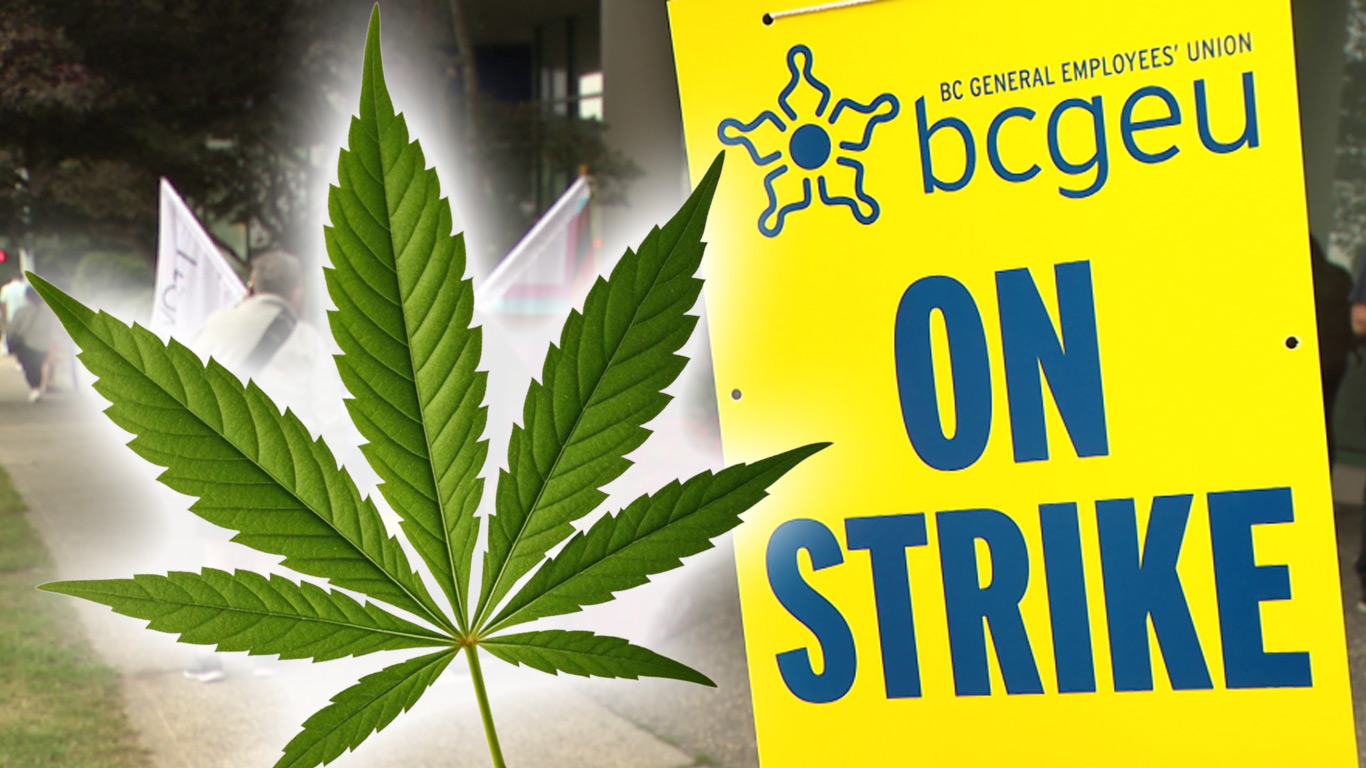
After weeks of uncertainty and supply shortages, British Columbia’s legal cannabis industry is finally seeing a light at the end of the tunnel.
The B.C. General Employees’ Union (BCGEU) has reached a tentative agreement with the provincial government, potentially ending the long-running strike that has disrupted the province’s liquor and cannabis supply chains since early September.
The deal, which still requires ratification by the union’s roughly 34,000 members, includes a three-per-cent annual wage increase over four years and what union president Paul Finch called “significant progress” on wages, affordability, and remote-work arrangements. Workers are expected to return to their jobs Monday, bringing a long-awaited restart to the province’s public service network—including the distribution systems that move legal cannabis from licensed producers to retailers across British Columbia.
While many headlines have focused on the impact to liquor stores, the cannabis sector was hit even harder. The strike directly targeted BC Liquor Distribution Branch (LDB) facilities, which handle warehousing and logistics for both liquor and cannabis. When those operations shut down, the entire legal cannabis supply chain was effectively brought to a standstill. Government-run BC Cannabis Stores halted online sales, deliveries to private retailers slowed to a crawl, and shelves across the province began to empty.
The supply interruption left many legal cannabis retailers struggling to restock and forced some to temporarily reduce operating hours or selection. For consumers, it meant frustration and limited options—and for the provincial system as a whole, it represented a serious setback.
This crisis wasn’t just a labour dispute, it was a warning about the fragility of B.C.’s cannabis system. Because the government maintains a monopoly over wholesale distribution, any labour action at the LDB can instantly freeze the entire supply chain.
The strike laid bare what cannabis advocates have been saying for years: the province’s centralized control over distribution isn’t just inefficient, it’s dangerous for the stability of the market and the livelihoods of everyone in it. For many in the industry, this strike has renewed calls for reform, such as allowing more flexible distribution options or direct delivery models that bypass government bottlenecks altogether.
With the new agreement in place, cannabis retailers and producers are breathing a sigh of relief. Distribution and logistics are expected to resume this week, restoring the flow of legal products to stores and customers. This return to normalcy is crucial for maintaining confidence in the regulated system.
For now, though, the cannabis sector is focused on recovery. As BCGEU members prepare to vote on ratifying the deal, workers will return to their posts and the province’s cannabis logistics network will gradually restart. After eight weeks of delays, the legal market can finally begin to replenish its shelves and restore service to consumers.
If the agreement is ratified smoothly, it will bring a welcome sense of stability after a turbulent season for cannabis businesses. But it also serves as a reminder: a fair and functional system depends not only on labour peace but also on a distribution model resilient enough to withstand the pressures of real-world disruption.

