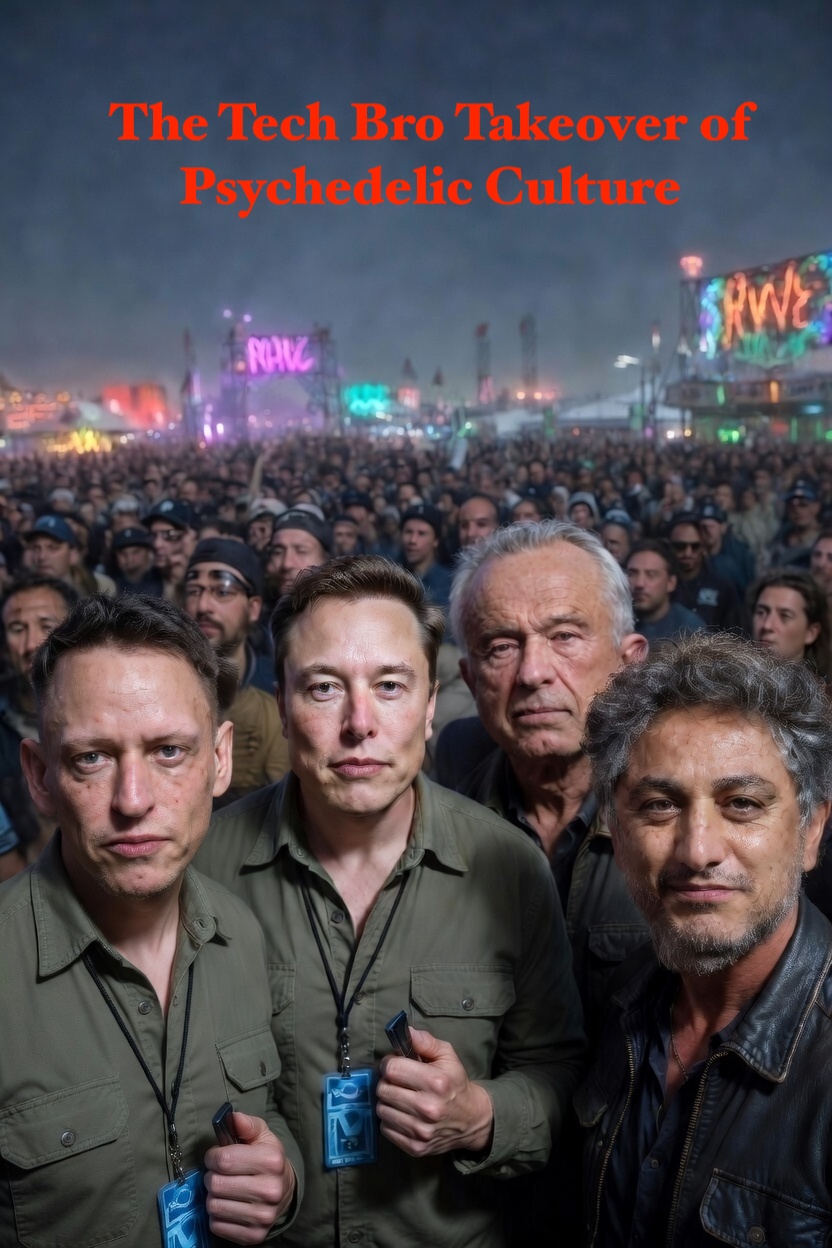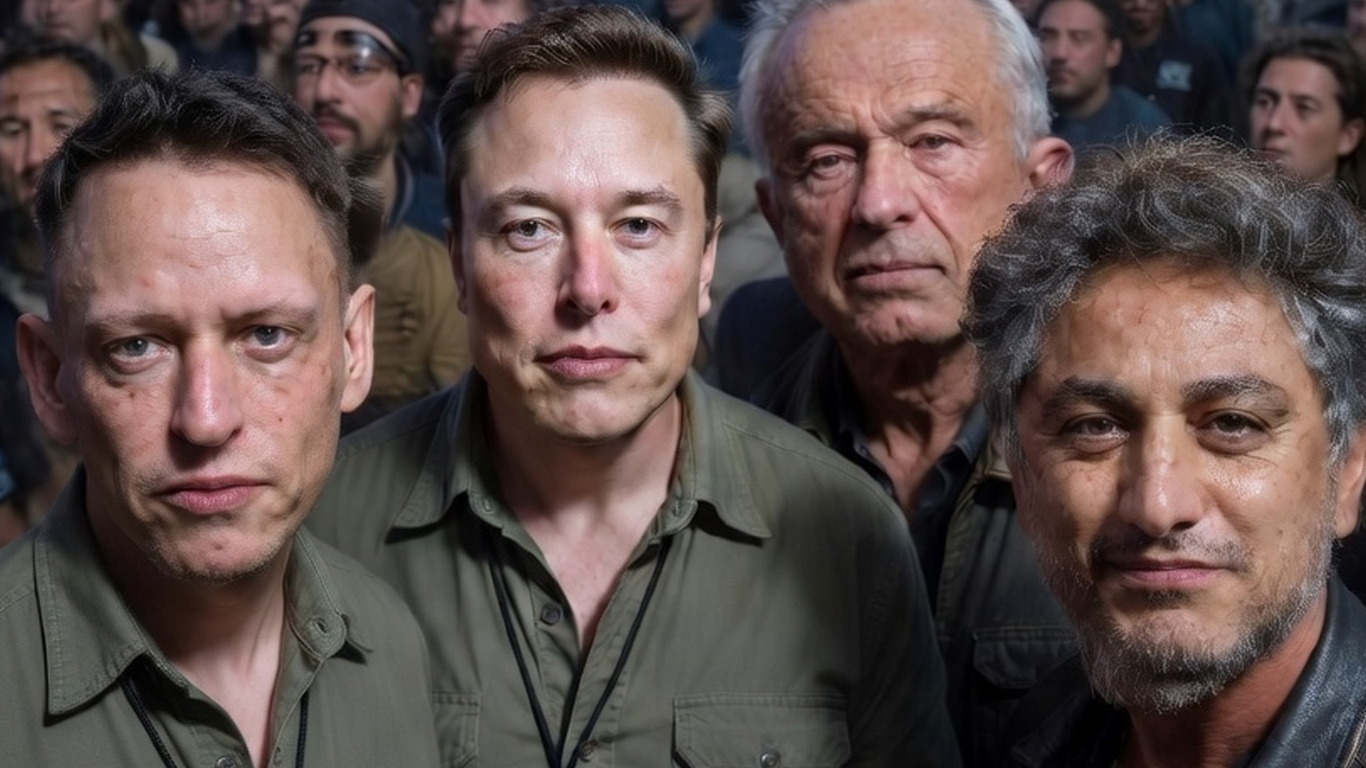
Ironically, an important segment of MAGA has grabbed the reigns of the counter culture use of psychedelic drugs, and are now taking them down a new path.
However, here, it is also important to remember that although psychedelics became iconic symbols of the 1960s counterculture—tied to peace, love, rebellion, and spiritual exploration—their widespread introduction to American society was far from organic. Decades earlier, the CIA’s covert MKUltra program (and related projects like Bluebird and Artichoke) had already experimented extensively with LSD, psilocybin, mescaline, and other mind-altering substances, dosing unwitting civilians, military personnel, prisoners, and even agency staff in attempts to develop truth serums, interrogation techniques, and methods of psychological control. These Cold War-era programs, which ran from the early 1950s through the 1970s, flooded university labs, psychiatric clinics, and eventually the broader public with psychedelics—often through front organizations, academic grants, and leaks into the emerging Beat and hippie scenes—helping set the stage for the counterculture’s embrace of these drugs as tools of liberation rather than state-sponsored weapons of manipulation. Psychedelics, were a Genie, the CIA tried to keep in a bottle, that got away.
In Silicon Valley, many of the same tech bros who aided Trump’s rise to power have long treated mind-altering substances as productivity hacks, creativity boosters, and mental-health resets, evolving from the 1960s LSD experiments of early engineers to today’s ketamine clinics and microdosing routines. Elon Musk publicly admitted using prescription ketamine in small doses every other week or so to jolt himself out of depressive “negative chemical states,” insisting it helped him stay productive and was even good for investors. Reports later suggested his use sometimes intensified alongside MDMA (ecstasy) and psychedelic mushrooms, occasionally causing side effects like bladder problems—claims Musk has pushed back on, saying he stopped years ago. His younger brother Kimbal has gone further into the scene: a decades-long Burning Man regular who once described an ayahuasca trip where he “felt the voice of God” after a near-death injury, and who joins the family’s broader embrace of the festival’s psychedelic culture—though he stepped away from the Burning Man board in early 2026 amid controversy over documented post-conviction connections to Jeffrey Epstein, including emails arranging meetings and thanking Epstein for introductions to women in his network, as revealed in recent Department of Justice file releases.
That Burning Man ethos—raves, self-discovery, and substances like MDMA, DMT, and ketamine—has become a shared ritual for tech elites chasing breakthroughs. Musk himself has shown friends charts claiming MDMA and mushrooms are healthier than alcohol, and the festival’s vibe of radical openness has influenced how many in the industry view drugs: not just recreation, but tools for insight and healing and more importantly to them, as potential sources of investment and profit. This scene has also drawn in figures like Brian Muraresku, whose book The Immortality Key—positing ancient initiatory Christian use of psychedelic-infused wines (such as LSD-like ergot preparations)—has resonated strongly with this crowd, including Musk (who erected a tribute statue at Burning Man) and Thiel, with Muraresku maintaining ties to associates like Antonio Gracias and the Musk family through non-profit work. [Check out my article on Muraresku’s book, to see why I felt he borrowed ideas from my own work and others without proper credit, as well as other criticisms – The Immortality Key: Lost on The Road to Eleusis]
Peter Thiel has made substantial investments in the emerging field of psychedelic therapeutics, primarily through his backing of atai Life Sciences (now rebranded as AtaiBeckley following its 2025 merger with Beckley Psytech). As a major early investor and ongoing supporter, Thiel has helped fuel atai’s development of innovative, clinically focused treatments for mental health conditions such as treatment-resistant depression, social anxiety, PTSD, and addiction. The company’s pipeline emphasizes therapeutic—not recreational—applications of psychedelics, including compounds like DMT (e.g., VLS-01 buccal film), mebufotenin (BPL-003 nasal spray), R-MDMA (EMP-01 oral form for social anxiety), psilocybin derivatives, and novel non-hallucinogenic 5-HT2A agonists. Atai has also long maintained a significant stake in Compass Pathways, a leader in synthetic psilocybin-based therapies for depression and related disorders. These efforts, widely covered by outlets like Bloomberg, CNBC, Forbes, and Seeking Alpha, position Thiel as a key figure among tech investors advancing regulated psychedelic medicine, despite industry challenges like clinical setbacks and market volatility.
Antonio Gracias, a billionaire investor and former high-level DOGE participant alongside Musk, led a $50 million recapitalization of Lykos in late May 2025 through foundations he controls (along with British billionaire Christopher Hohn), following the company’s FDA rejection in 2024 over trial flaws. He restructured the board, appointed new leadership, and now plays a hands-on role in steering the firm toward renewed FDA approval efforts—potentially turning MDMA into a multibillion-dollar therapeutic product if successful. This move stems partly from a chance encounter with MAPS founder Rick Doblin at Burning Man, underscoring how the festival’s culture continues to bridge Silicon Valley wealth, psychedelic advocacy, and commercial ambitions. Gracias has a track record of supporting psychedelics, including $1 million to MAPS in 2020 and $16 million for Harvard research in 2023.
MAPS, the Multidisciplinary Association for Psychedelic Studies, and its Israeli affiliate, MAPS Israel, have also focused efforts on treating trauma among Israeli populations, particularly IDF soldiers and survivors of the October 7, 2023, Hamas attacks. Israel was the first country to approve a government-backed Compassionate Use program in 2019 for MDMA-assisted psychotherapy outside clinical trials, supported by the Israeli Ministry of Health and targeting up to 50 patients—explicitly aimed at underserved groups like IDF soldiers and veterans whose mental health needs from military service are often overlooked. This built on earlier Phase 2 and Phase 3 trials in Israel that included cases of war-related trauma. A key focus has been veterans with PTSD from combat experiences, including moral injury.
This research goes back decades, a 2005 Der Spiegel article Ecstasy on the Battlefield stated “Ecstasy is the drug of choice for the Pentagon. Soldiers suffering from post-traumatic stress disorder are to be given the drug as a therapy aid.”
The United States government has found a new way of recruiting soldiers for the Iraq war: It’s offering them ecstasy. The trick is, the soldiers only get the free drugs after they have seen enough fighting to be experiencing flashbacks, recurring nightmares and other symptoms of post-traumatic stress disorder. The usually tough-to-please US Food and Drug Administration has given the experimental treatments an initial go ahead and scientists in South Carolina have quickly gotten to work. The idea is to take advantage of the touchy-feely effect ecstasy (the “happiness drug”) has on people to get soldiers to open up about the trauma they have faced. In other news, the US government spends $20 billion a year on the drug war. (SPIEGEL 2005)
A 2005 Maps Journal article, MDMA and Warfare: Rumor Control, Ethical Concerns and Hopes for the Future, by Brandy Doyle noted that:
While some MAPS supporters expressed outrage that the Pentagon would be involved in MDMA research, MAPS President Rick Doblin commented on the MAPS E-mail Forum that it would be great if the military would take over funding projects like this. Whether that would be a misuse of a precious tool or an important step toward “mainstreaming” MDMA, it’s an issue that is years down the road. [and here we are…..]
Drugs are certainly used by the military already, most commonly amphetamines (”go-pills”) and sedatives (”no-go pills”) for pilots. The Pentagon has experimented with all sorts of substances, sometimes testing them on soldiers without their consent or knowledge. Acid Dreams, by Martin Lee and Bruce Shlain, offers a well-researched look into the sordid world of CIA and Pentagon-funded research on LSD during the Cold War. American soldiers (as well as prisoners, addicts, CIA agents, and others) were given LSD and other drugs to test their efficacy as truth serums and disorienting agents. Some of this research was conducted by former Nazi scientists, brought into the country illicitly via Operation Paperclip, who had tested mescaline on concentration camp inmates.
With such a legacy of unethical “research,” carefully evaluating the ethics of any psychoactive drug research program is imperative. However, is offering soldiers a way to heal the trauma of war analogous to supporting warfare? This became a topic of passionate debate on the MAPS E-mail Forum in February and March of 2005, in a thread called “MDMA abused as a weapon of war” (you can find this by searching the forum archives for “weapon” at http://www.maps.org/forum/search.html). Some suggested that this treatment would be, effectively, supporting war (or at least this war), by allowing soldiers to “feel better” about war-related atrocities and perhaps return to commit them again, conscience-free. Others argued that soldiers are victims of war, too, and deserve the same compassion as other PTSD sufferers.
This conversation is more relevant than ever as MAPS works towards an MDMA/PTSD study in Israel focused solely on war – and terrorism-related PTSD. While we hope to eventually include Palestinian therapists and participants, logistics and politics prevent that at this stage. (Doyle, 2005)
On the MAPS forum some users left dissenting response to this, with comments like, “ I am not against helping war veterans. I am against the use of MDMA (or any other medicine) for the purpose of returning soldiers to the battlefield. This is among the most horrible forms of drug abuse I have read about in years. IMHO this type of research should be banned!!!”; “Should we pursue the consequentialist road of allowing MDMA to be used as a war weapon so that in the future it is widely available for general therapy? Or should we draw a line on what is a moral use of the substance right now? I feel disgusted by the prospect of healing MURDERERS instead of preventing the murder with MDMA.” Overall though, at that time, the majority supported their supported it.
MAPS officially lists MAPS Israel (along with MAPS Canada and others) as a “Global Affiliate.” The two organizations work closely together on research projects, therapist training (including joint Israeli-Palestinian programs), and educational initiatives. MAPS Israel explicitly states on its website that it is “Collaborating with MAPS.” MAPS (U.S.) fiscally sponsors certain MAPS Israel initiatives, most notably the “Healing October 7th” project—a major multi-site clinical trial evaluating group MDMA-assisted therapy for PTSD among survivors of the October 7, 2023 attacks, Gaza-border residents, and Israeli soldiers. This allows donations to be tax-deductible under MAPS’s U.S. 501(c)(3) status.
MAPS Israel is developing and conducting studies on MDMA-assisted group psychotherapy specifically for Israeli veterans, assessing its safety and effectiveness in group settings to address the unique challenges of war trauma—drawing from global evidence of MDMA therapy’s high success rates in reducing PTSD symptoms, with protocols adapted for soldiers from conflict zones. Following the October 7 attacks, MAPS Israel’s Healing October 7 initiative expanded to include Israeli soldiers who served in affected areas, alongside other survivors such as Nova music festival attendees and residents of border communities. This multi-site program, which has raised significant funding (including $2 million toward a $2.3 million goal as of mid-2024), offers group-based MDMA-assisted therapy to treat war-related PTSD in shared-experience groups, aiming to heal collective trauma more efficiently and scalably. Recent approvals, including a 2025 multicenter trial (sponsored in part by Sheba Medical Center) comparing group and individual formats for up to 168 patients with trauma-related PTSD, continue to prioritize veterans and active-duty personnel impacted by ongoing conflicts—positioning MDMA as a promising tool for healing military trauma in Israel.
Notably absent from these publicly documented MAPS-supported programs is any equivalent treatment access or research focus on Palestinian victims of the ongoing conflict in Gaza—despite widespread reports of severe trauma, mass casualties, and mental health devastation amid allegations of genocide. While MAPS and MAPS Israel have, since their inception, worked to increase access to MDMA-assisted therapy for Palestinians—including training Palestinian facilitators (some of whom lead studies recruiting Palestinian citizens of Israel) and issuing statements supporting education, research, and healing across the region—no comparable clinical trials or therapeutic offerings have been rolled out for Palestinians in Gaza or the West Bank, where access to such experimental treatments remains practically impossible due to the war’s destruction of infrastructure and ongoing blockade
I should note here, that I have had personal interactions with the current Executive Director of MAPS Canada, Dr. Rielle Capler, who I have known for decades, and in my opinion, she is an extreme Zionist, who justified the bombing of children and civilians throughout the Gaza invasion, and has regarded opposition to Israel’s bombardment of civilians as coming from “Terrorist Apologists”.
This therapeutic enthusiasm for treating IDF soldiers raises profound ethical questions about the potential for relieving the guilt associated with war crimes. In a period when Israeli military operations have resulted in the deaths of tens of thousands of Palestinian children and civilians, and the International Criminal Court has issued arrest warrants for Israeli leaders on charges of war crimes and crimes against humanity, the use of MDMA to alleviate moral injury and PTSD takes on a troubling new light. Adding to the concern is Israel’s documented failure to prosecute its soldiers for rape and other atrocities, as evidenced by the military’s recent decision in March 2026 to drop all charges against five reservists accused of sexually abusing a Palestinian detainee at Sde Teiman. If these soldiers undergo MDMA-assisted group therapy and have their consciences chemically eased, one must ask: are they simply to return to active service, psychologically reset and ready for further deployment? The parallel is disturbingly reminiscent of the Nazi Wehrmacht’s mass distribution of methamphetamine (Pervitin) during World War II, which was used to suppress fatigue, fear, and moral qualms, enabling troops to sustain prolonged campaigns of aggression and atrocity with diminished psychological resistance. In both instances, psychopharmaceuticals risk serving not just as tools for personal healing but as enablers of unchecked military power.
Beyond personal and commercial use, psychedelics are increasingly explored in high-stakes contexts, including military applications. In Ukraine, soldiers have accessed legal ketamine for PTSD and trauma management at private clinics, with reports of underground use of MDMA, psilocybin, and ibogaine for treatment-resistant cases, recuperation, and even to enhance mental sharpness and recovery amid ongoing conflict—echoing broader experimentation for performance optimization. RFK Jr., a key figure in this space, has reportedly used frog venom (containing the potent psychedelic 5-MeO-DMT from the Sonoran Desert toad) regularly, aligning with his push for alternative therapies.
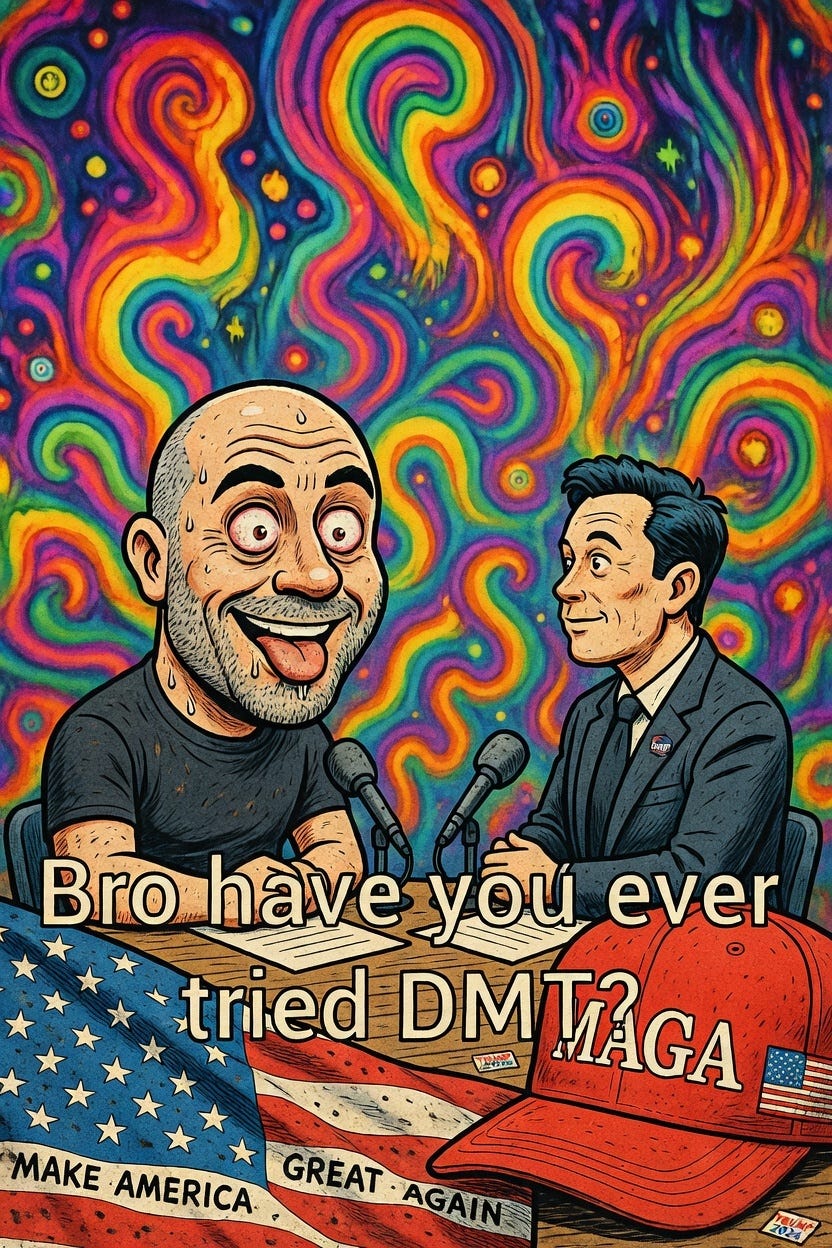
Adding another layer to this rightward shift, Joe Rogan has played a pivotal role in mainstreaming psychedelics among conservative audiences, amplifying guest stories on DMT breakthroughs, ibogaine resets for addiction, and MDMA therapy for veterans while boosting figures like Brian Muraresku—whose The Immortality Key surged in popularity after Rogan appearances. More recently, the emerging face of psychedelic advocacy in America includes W. Bryan Hubbard, a Kentucky-based advocate and former chair of the state’s Opioid Abatement Advisory Commission, who appeared on Rogan’s show (#2251) alongside Rick Perry (who once told Donald Trump “You really are the chosen one”) to champion ibogaine as a breakthrough treatment for opioid addiction and mental health issues. Described in conservative circles as operating within deeply religious and politically right-wing environments, Hubbard now leads the REID Foundation’s American Ibogaine Initiative (founded by influential GOP strategist Rex Elsass), pushing state-level research and framing these substances as pragmatic, anti-Big Pharma solutions—backed by networks that include Republican leaders and potentially aligned with MAGA funding interests. Though Hubbard’s direct support comes from conservative philanthropic and political channels, the broader ibogaine push intersects with tech elites, as seen in investments like Google co-founder Sergey Brin’s reported $15 million stake in an ibogaine startup and funding from Musk allies in related psychedelic ventures, further illustrating how these substances are being reframed by the Right from countercultural taboo substances to patentable pharmaceuticals for healing, and a gatekeeper infrastructure and licensing for practitioners who use them.
As a result of lobbying and support from such groups and individuals, RFK Jr., as HHS secretary, made it a Make America Healthy Again priority—pushing fast-tracked research and approvals for MDMA (PTSD), ibogaine (addiction and trauma), and related therapies, even suggesting clinical access within a year. That enthusiasm helped flip traditional GOP skepticism: Texas poured $50 million into ibogaine trials, other red states advanced similar measures, and federal studies ramped up, all pitched as anti-Big Pharma pragmatism for mental-health crises.
Musk’s alleged heavy ketamine use drew sharp criticisms when detailed reports emerged in 2025, particularly tied to his high-profile White House role leading the Department of Government Efficiency (DOGE). A major New York Times investigation claimed his consumption went far beyond occasional prescription doses—sometimes daily during the 2024 campaign and into his advisory period—leading to bladder issues (a known risk of chronic abuse) and use of ecstasy, mushrooms, and possibly Adderall-like stimulants. Critics, including House Democrats who launched inquiries asking if Trump knew of any drug use in federal buildings or on the campaign trail, raised concerns about judgment, security clearances, and the propriety of someone wielding immense influence over federal policy while allegedly impaired. Even within the administration, figures like Chief of Staff Susie Wiles later called him an “avowed ketamine user” and an unpredictable “odd duck.” Musk vehemently denied the allegations in the Oval Office during his send-off—lashing out at reporters and the Times as liars—and posted on X that he hadn’t used it since years prior, but the reports fueled perceptions of erratic behavior and questions about accountability at the highest levels. The crossover is striking—an unlikely alliance of biohacking optimism and populist reform that’s nudging psychedelics toward mainstream therapeutic status. Supporters see game-changing relief for treatment-resistant conditions; critics pointed to risks like ketamine’s bladder damage or ibogaine’s heart concerns. Either way, what started as a tech-bro Burning Man ritual has helped open policy doors on the right, blending self-optimization culture with a gold scissors that can cut through the red tape of institutional gatekeepers.
This enthusiastic push for psychedelics within Trump’s orbit—exemplified by Musk’s circle investing in and leading MDMA development companies—stands in stark conflict with the traditional Republican “war on drugs” stance that long emphasized strict prohibition and criminalization of substances like MDMA (still federally Schedule I). It also ironically aligns more closely with the biblical warnings in Revelation about pharmakeia (often translated as “sorcery” or “drug use,”, which condemns mind-altering substances as tools of deception and spiritual corruption in the end times, rather than the punitive enforcement rhetoric historically championed by the right. In this evolving landscape, what was once decried as moral decay in counterculture is now being reframed—and potentially fast-tracked—as innovative medicine by those in power. Psychedelics are a tool, like a hammer, which can be used to smash heads, or build a beautiful structure. In the hands of the MAGA elite, they are clearly just another tool of power and enforcement.
Excerpted from – Zeitgeist Apocalypse: Trump as the Antichrist, MAGA as Heresy, and America as Babylon: Apocalypticmania Part 9: The United States of Armageddon coming soon @ https://substack.com/@chrisbennett420