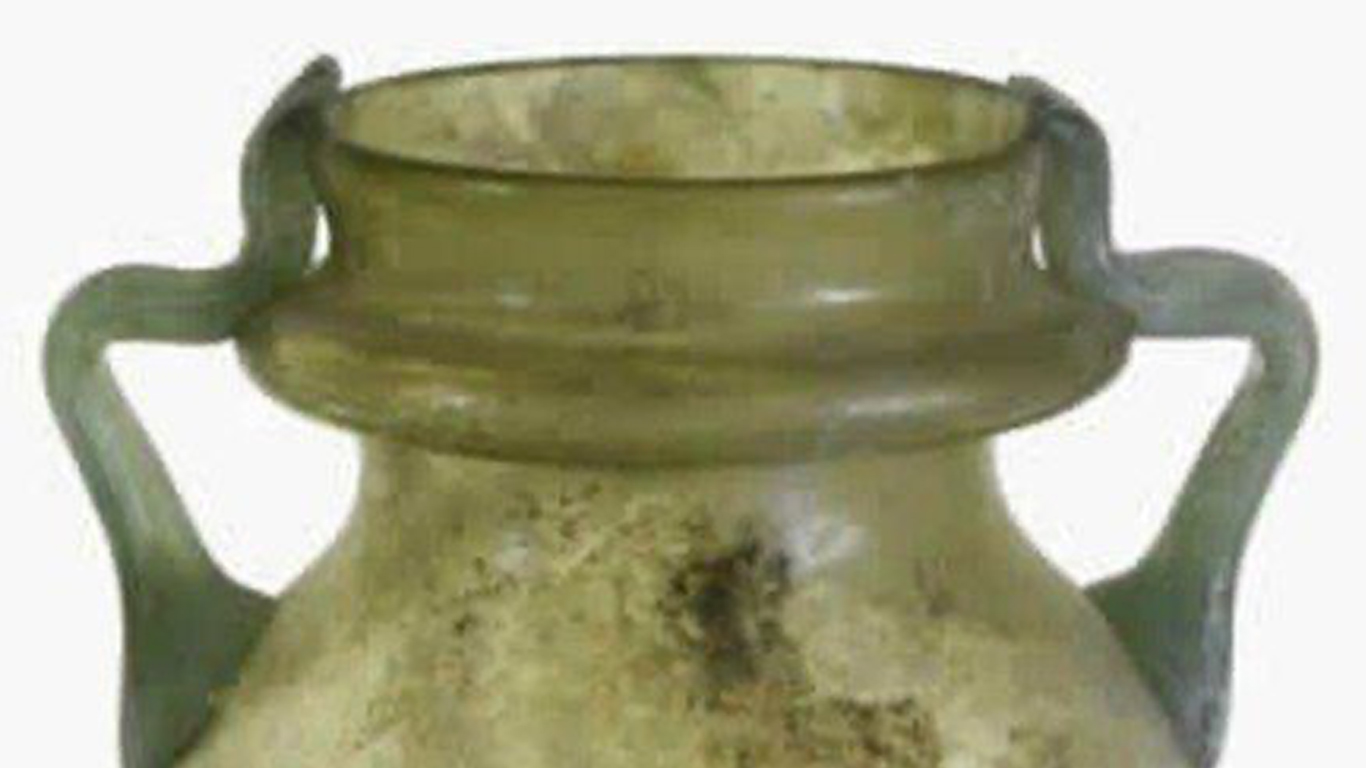
This glass jar is a medical cannabis artifact recovered from a 4th century CE site in Beit Shemesh, Israel that confirms the use of cannabis incenses and topical preparations in the area. In a tomb that contained the remains of a teenage girl who died in childbirth, archaeologists found in a “glass jar, the remains of burnt reeds, different herbs, and cannabis sativa were identified, the concoction vaporized in the glass vase and presumably inhaled as a medicine to ease pain. This mixed powder was found in the girl’s stomach, indicating that she was inhaling the cannabis herbal potion for relief during the birth.” (Israel Antiquities Authority, 2022).
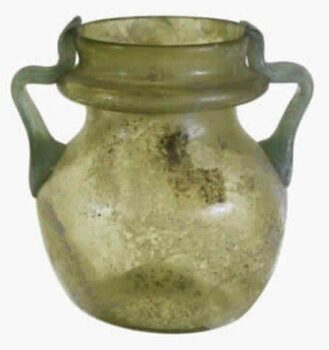
The analysis of the dark material in the jar revealed the presence of Δ6-THC, an acid catalytic by-product of Δ1-THC and cannabidiol (CBD). (Zias et al.,1993) concluded that the purpose of giving the cannabis to the girl (by inhalation and topically) was to increase the increase of uterine contractions and to reduce birth pain. Cannabis has well known medicinal properties in regards to relieving the pain associated with childbirth.
“I thought it was incense,” Zias said. But when he had it analyzed by police and chemists at Hebrew University, it turned out to be a seven-gram mixture of hashish, dried seeds, fruit and common reeds.
Seven glass vessels containing traces of the drug were found near the skeleton. She probably used them to inhale the smoky cocktail to aid her delivery. Medical researchers have found that other than relaxing the user, hashish increases the force and frequency of contractions in women giving birth. It was used in deliveries until the 19th century, after which new drugs were developed. (Vessels Offer Window Into Ancient Use of Drugs, Los Angelas Times, 2002)
The Eber’s Papyrus, circa 1550 BC, one of the oldest and most important medical papyri of ancient Egypt, prescribes cannabis and honey “to cool the uterus and eliminate its heat” during childbirth. This use was likely widespread in the ancient world. In Women and Cannabis Medicine, Science, and Sociology (2002) the authors affirm that “archaeological, and written records substantiate that the plant was often used to treat female ailments, such as dysmenorrhea, ease labor, alleviate morning sickness/ hypermesis gravid arum, and/or facilitate childbirth in places such as: Ancient Egypt, Judea, and Assyria…” (Russo, et. al. 2002).
A History of Jewish Gynaecological Texts in the Middle Ages, records a medieval Hebrew medicament for pregnancy that contained cannabis called the “Head Shield,” which included cannabis alongside nard, saffron, frankincense, cassia and other exotic ingredients came down through the medieval Rabbis Sheshet, and Yehudah Harizi. It is unknown if this was based on earlier medical recipes. (Barkai, 1998).
In Africa, Sotho women smoked the leaves and other parts of the plant for this reason. In Morocco, midwives used the smoke of cannabis to induce abortion in pregnant women wishing to terminate their pregnancy. References in the ancient Zoroastrian Zend Avesta also indicate this use.
Cannabis appeared in late 19th century and early 20th century uterine medicines as well. Cannabis is increasingly used for managing gynecological conditions like menstrual cramps, endometriosis, and pelvic pain, with evidence suggesting it reduces pain and limits opioid use. THC and CBD act on endocannabinoid receptors in the uterus to relax muscles.
Ancient Wisdom and Modern Science !
Together with the discovery of cannabis resins on a 8th century BCE altar from tel Arad Jerusalem, this discovery established a confirmed span of 1,200 years of use of cannabis for spiritual and medical purposes in ancient Israel.