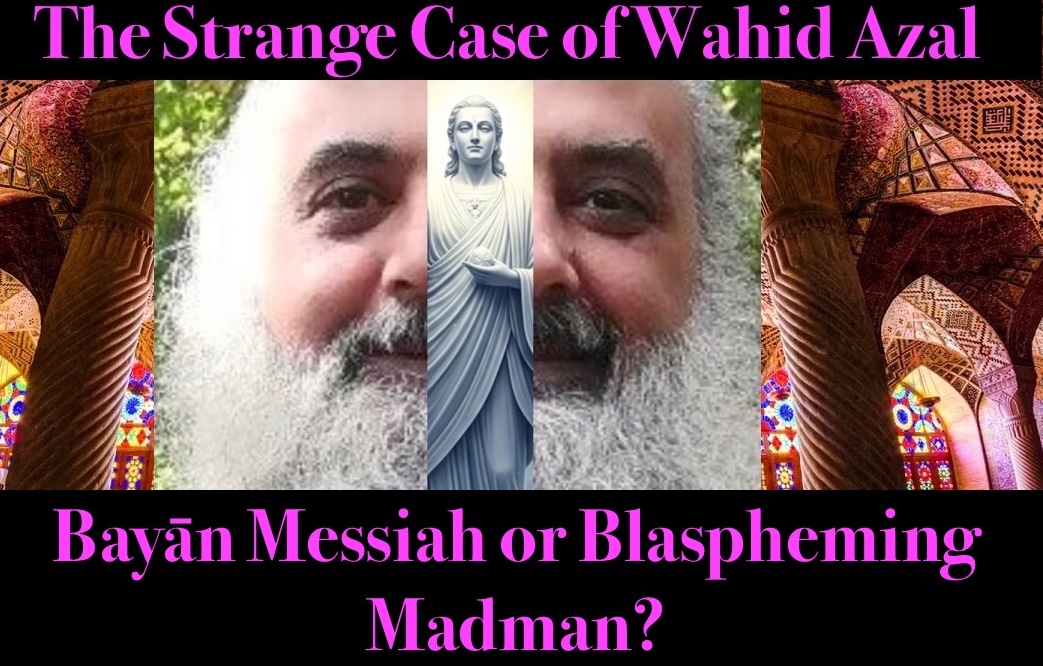
Part 2 of a 3 Part series, Questions about the 2014 Iranian ‘Psychedelic Fatwā and Wahid Azal?
In Part 1, The ‘Psychedelic Fatwā’ we dissected a single grainy photograph of a supposed 2014 fatwa from an Iranian ayatollah declaring ayahuasca halal for Twelver Shiʿites — a document that has never surfaced in any marjaʿ office, seminary library, or scholarly publication, yet continues to circulate online as proof of an Islamic “psychedelic renaissance.” Its sole promoter, the man who first posted the photos and has defended them for over a decade, is an Australian-Iranian named N. Wahid Azal. The fatwā’s legitimacy stands or falls entirely on Azal’s own credibility. So in Part 2 we finally ask the question that should have been asked years ago: who exactly is this self-appointed guardian of esoteric Islam, why has virtually every religious or esoteric community he has ever entered ended up publicly disavowing him, and what happens when a private messianic revelation meets twenty-five years of unbridled internet rage? The answers are stranger, darker, and far more revealing than any scanned letter from Qom.
Part 2: The Strange Case of Wahid Azal
From Nima Hazini to Wahid Azal
Wahid Azal, is an Australian-Iranian independent scholar. He was born in Tehran (1971) under the name, Nima Hazini (sometimes rendered as Nima Sadra Hazini). As a child Nima lived in West Germany and Iran. He and his family left Iran for the United States at the beginning of the Iranian Revolution in 1979, later moving to Australia in 1982. In 1989 after completing his high school Nima Hazini returned to the United States. He studied at the University of New Mexico and briefly in California. His educational background includes a BA from the University of New Mexico (1994), an MA in Near Eastern Languages and Cultures from UCLA (1997), and an LLB from Queensland University of Technology (2003).
Nima came from a family that followed the Baháʼí religion, but after a claimed religious revelation, he rejected that and became a self-proclaimed adherent of the Bayānī (Azalī Bābī) faith, a small esoteric offshoot of Bābism . Bābism itself, influenced the development of the the Baháʼí faith. Wahid claims to be the modern and current successor of the Bāb the founder Bābism, and the true spiritual leader of 19th century tradition attached to that title. To understand this some brief history needs to be explained.
Bábism was a 19th-century messianic movement founded in Persia (Iran) in 1844 by the Báb (Sayyid Ali Muhammad Shirazi). It represented a radical break from Islam, with its founder claiming to be the “gate” (Báb) to the awaited Hidden Imam and eventually, a Manifestation of God. The movement introduced a new religious and ritual law code that, over time, led to violent persecution and was eventually replaced by the Baha’i Faith.
Bábism and the Bahá’í Faith are directly related. Bábism is the parent religion, and the Bahá’í Faith is its child. Here is the clear historical line:
1844 – In Shiraz, Persia (Iran), a 25-year-old merchant named Siyyid ‘Alí-Muhammad declared Himself the Báb (“Gate”).
→ He announced He was the promised “Mahdi”/messianic figure awaited by Shí‘ih Muslims and the herald of an even greater Messenger who would come after Him.1844-1850 – His followers were called Bábís.
→ They accepted the Báb’s new holy book (the Bayán), new laws (no jihad, monogamy, etc.), and faced ferocious persecution.
→ Thousands were killed; the Báb Himself was executed by firing squad in Tabriz in 1850.1850-1863 – After the Báb’s death, most Bábís followed His appointed successor, Ṣubḥ-i-Azal as the Báb’s appointed head.
1863 – In Baghdad, the influential figure, Mírzá Husayn-‘Alí Núrí, titled Bahá’u’lláh (“Glory of God”) privately declared to a few followers that He was the promised “Him Whom God shall make manifest” foretold by the Báb.
→ Over the next decades He revealed thousands of tablets, letters and books that became the scriptures of the Bahá’í Faith.
1866–1867 – Almost all Bábís (90%+) still recognized Ṣubḥ-i-Azal. The shift to Bahá’u’lláh happened gradually and dramatically only after the Edirne period (1863-1868) and the public declarations.
→ There was a lot of controversy around the replacement of Ṣubḥ-i-Azal by Bahá’u’lláh, and this caused schisms, creating the Azalī and Bahāʼī. There is a dispute regarding whether Subh-i-Azal was permanently designated as the Bāb’s successor or merely appointed, as the Bahā’īs officially assert, as a protective measure for Bahā’u’llāh. The conflicting accusations, claims, and counter-claims of Azalī and Bahāʼī sources make it difficult to reconstruct an objective narrative of the splitting of the Bābī community into these two groups, one of which came to dominate and expand, while the other became almost defunct. Historically, the Báb’s own writings (especially the Persian Bayán and numerous tablets) very clearly and repeatedly designate Ṣubḥ-i-Azal by name (as “Thamarih-yi Azal” or “Subḥ-i-Azal”) as the one Bábís should turn to after him. The “temporary regent” idea appears later in Bahá’í apologetics. Azalís and most 19th-century neutral observers (E. G. Browne, British diplomats, etc.) regarded Azal’s appointment as unambiguous.
1865 – According to Bahá’í accounts, Subh-i-Azal was behind the poisoning of Baháʼu’lláh while in Edirne in 1865. According to Mirza Aqa Khan Kermani (a son-in-law of Subh-i-Azal), he poisoned himself while trying to poison Subh-i-Azal. The poisoning had adverse effects on Bahaʼu’lláh throughout the remainder of his life.
1866 – A Bahāʼī, Salmānī, reported that Azal again attempted to have Baháʼu’llāh killed in the late winter of 1866. In March 1866, Baháʼu’llāh responded with a formal written declaration to Subh-i-Azal in the Sūri-yi Amr and referred to his own followers as Bahāʼīs.
1868 – Subh-i-Azal, along with Sayyid Muhammad Isfanani made accusations against Baháʼu’llāh to the Ottoman authorities, which resulted in both factions being further exiled in 1868; Baháʼu’llāh to Acre and Azal to Famagusta in Cyprus
History from there sees both Bábist and Azalī numbers dwindling, while the Bahāʼī has grown into a religion followed by millions of adherents.In The Testamentary Disposition of the Primal Point, Wahid translates documents relating to all this, and Subh-i-Azal’s rightful place as the true successor to the Báb.
In the mid Twentieth Century, Jalal Azal, the grandson of Subh-i-Azal, re-opened these old wounds. Like Nima/Wahid, he was first associated with the Bahá’í community, but he later became disaffected, attacked the Bahá’í Faith, and attempted to resurrect his grandfather’s religious movement and claims as the true successor of the Báb. He is reported to passed away in April, 1971, due to a cerebral stroke, which according to Bahá’í accounts, was caused by excessive alcohol consumption, although some consider this a smear.
And this is the point where a young and aspiring Nima Hazini comes in, and takes on the name Wahid Azal, which was chocked full of symbolic meaning relating to this past history…..
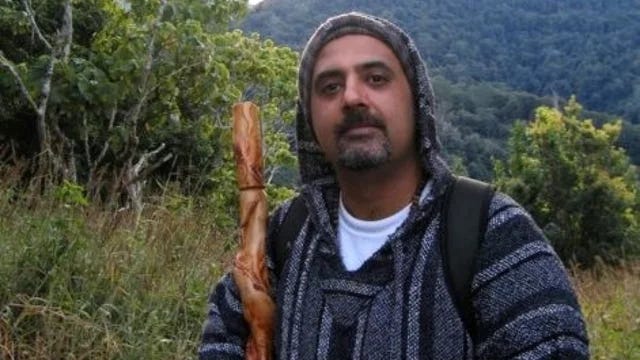
A young Nima Hazini sets out on his journey to becoming Wahid Azal
The Fool’s Journey, or First Steps of a Messiah?
Nima Hazini’s great disillusionment with the Baha’i, which directly lead to his journey of becoming Wahid Azal, began will he was in University. In the mid-1990s, he was immersed himself in religious studies and philosophy at the University of New Mexico, he dove headfirst into the Bahá’í intellectual underground via the Talisman email list—a private academic forum hosted by Indiana University since 1994, moderated by Professor John Walbridge, and co-founded with historian Juan R. I. Cole. With over 100 subscribers, Talisman was a pressure cooker for taboo topics in Bahá’í circles: theology, history, gender equality, homosexuality, and the faith’s notorious “review” process for publications, which many saw as outright censorship stifling free thought. Hazini didn’t just lurk; he erupted. His posts were a torrent of fury, branding the Universal House of Justice and National Spiritual Assemblies as “fascist” overlords enforcing authoritarian dogma. He shredded sacred cows like ‘Abdu’l-Bahá’s Will and Testament and Shoghi Effendi’s administrative empire, calling them illegitimate power grabs—rhetoric that painted him as the list’s premier “Talismaniac,” a radical voice amplifying the chasm between open inquiry and the faith’s ironclad demand for unity.
The powder keg blew in 1996 when the U.S. National Spiritual Assembly (NSA) zeroed in on Talisman as a nest of “Covenant-breaking” heresy, strong-arming Walbridge to scrub “inappropriate” content after leaks like a private flame war email and whispers of reform protests hit the public feed. By February, the NSA slammed it as an “instrument of the Covenant-breakers,” ordering subscribers to bail or face shunning. Resignations cascaded, protests lit up, and media sniffed blood, but Hazini was ground zero—his missives flagged as prime exhibits of subversion. Indiana University yanked the plug in late 1996 under NSA heat, and for Hazini, that was the kill shot. On November 25, 1996, he fired off a blistering open resignation letter torching the administration’s “corruption” and intellectual stranglehold, ditching the Bahá’í Faith and his university track in one fell swoop.
For more details on this see The Talisman Crackdown: Faith vs. Free Expression in the Internet Age which offers clear, chronological narrative of the list’s origins, key flashpoints (like the NSA’s intervention and shutdown), and its broader implications for intellectual freedom in the faith.
In a 1999 letter he refers to his official resignation in 1996 from the Church, but at that times was still a full believer in the faith itself.
When I sent in my resignation letter to the American National Spiritual Assembly back in November 1996, I told them in no uncertain terms that I wished to withdraw from the *Baha’i community* due to the wrong direction I felt the Baha’i Faith was currently being led by its leadership given all that transpired as a result of the Talisman 1 fiasco. But I also spelled it out to them very strongly that I continued to believe in Baha’u’llah as the Manifestation of God for the age (which I still do). They speedily accepted my resignation without why or wherefore… I chose to remain on the outside until such time as the internal contradictions (to use a marxian catch-phrase) within the Baha’i community are resolved. But I am still very much a believing Baha’i (Bab, Baha’u’llah, `Abdul-Baha, Shoghi Effendi, Universal House of Justice and all). (Nima Hazini. 1999)
In 1999 comments , listed under Nima – ex-Bahai Tracked & Harassed around the Globe Nima gives us further details into his struggle with the Baháʼí:
I withdrew in November 1996 and moved back from California to the Southwest in March. I pretty much had severed all contact with Baha’is during this time, not to mention that I was off-line for much of 1997 (March to December). I reignited my former contacts with Sufi friends in the area and was even initiated into an Order. No one other me and one or two relatives, or so I thought, knew about my affliation. In late December I came to visit my parents in Australia, and lo and behold, there’s a letter waiting intercepted and kindly forwarded by the Local Spiritual Assembly of the Baha’is of the Gold Coast to my parents. The letter originated from the Office of the Secretary-General of the US NSA which the Australian NSA had summarised key contents and forwarded to the LSA here. It was supposed to be strictly an internal, confidential administrative communique, but given that the LSA here are all decent people who know my family and I well, out of their genuine concern they sent a copy along – and a week before I arrive at that (the original US NSA to the Aussies communication having arrived a week before that).]
In it the US NSA advises the Aussies that I had withdrawn accusing them of nasty things (not that I disagree with the assertion), and informing them that I had become “a supporter of Sufism.” They then advise the Aussies to carefully monitor my activities, by which the NSA here adds that I should be kept away from the youth in the community and that my activities should be put under surveillance and reported to them, etc. And then I hear from one of the LSA members that they had previously been informed about me, my activities and my association and friendship with those bad scholars. And, this, to a community I didn’t even belong to!
Now 1) how in the world did the US NSA know I had joined a Sufi order (I didn’t advertise it) and 2) was coming to Australia? Moreover, 3) what business was it of the US NSA to spy into my personal life months after I had officially resigned and not even been in contact with Baha’is? Also, 4) what gives the US NSA and the Australian NSA the right to incite others to shun me when I’m not technically even a Baha’i? Don’t they know that, at least here in Australia, surveillance of individuals for ideological purposes and institutional sanctioned shunning are illegal under the law? And 5) why is such Stalinist measures of surveillance, spying and blacklisting taken by certain “rogue” elements within the AO in the first place? So, unlike some people, I do not believe such modus operandi are isolated instances. Stuff like this happens all the time within the Baha’i community to ideological undesirables like yours truly. And the other, similar, cases have already been recounted here again and againand again and elsewhere.
We find references to Nima and his critical writing on an old Baha’i Angst page, that appears to be from the 90s, here he appears still to be a believer, but a dissatisfied and critical one. The page has a grainy image of a young man in BDSM gear, that claims to be Nima, and in a hyperlink on the page titled ‘Susan and Nima at the Unit Convention (Now here)’, we are shown 5 different photos of people in different BDSM attire and asked to choose which one is Nima.
In 2010, on a Iranian.com forum, an individual known as, Ali Sina, posting as Truthseeker9, claimed to have a background with Nima Hazini (aka Wahid Azal) and left this comment, which may give us some insights into the origins Wahid’s messianic claims [spelling and punctuation as it was posted]:
While in Australia, Nima went to have lunch at the house of one of his aunts. Some of his uncles and his grandfather and grand mother were also present. The husband of his aunt started to brag about his successes. Nima, while sitting at their table, eating their food, thought that his uncle is trying to humiliate him because Nima in thier eyes has been a bum. Nima responsed by ridiculing his uncle (the husband of his aunt). His uncle’s pride was hurt. We Iranians have huge egos. Half of that is under the ground. If a person injures our pride, we may kill him or at least make his nose bleed. That is exactly what happened to Nima at the house of his aunt. The husband of his aunt and other relatives there ambushed him and kicked him out of the house and made his nose bleed. Police got involved and things became very nasty. His relatives also told him that they would kill him if he showed up again. Oh well, we Iranians have also big mouths and issue such death threats quite often. But if we had to keep our promises, there would no Iranian alive today. Now Nima goes around saying that the Baha’is have issued death threats to him because he left the Baha’i Faith.
I explained to Nima that there is no reason for him to be angry at the Baha’i institutions because he was the one who resigned from that Faith. The Baha’i Institutions simply announced his resignation. If he did not want his apostasy be known he should not have resigned officially.
I also told him that the death threat was issued by his relatives and it has nothing to do with him leaving the Faith. They in fact let him in to their home and invited him at their table despite the fact that they knew he is no more a Baha’i. The death threats came when he insulted them in their home and it has nothing to do with him leaving the Baha’i Faith. In fact no one should take such threats seriously because words such as mikoshamet, khafat mikonam, pedareto dar miyaram (I’ll kill you, I’ll strangle you, I’ll unearth [the cadavr]of your father) are noraml Iranian talk. Even fathers say these lovely words to their children lovingly.
Anyway Nima, though very respectful at first towards me, was not very pleased at my observations. I found him to be an angry man and thought it is prudent to not engage in further discussions with him as he is prone to insult people who disagree with him just as he insulted his own uncle at his home. After all I am also an Iranian man and have a fragile ego too.
As his claim to be a manifestation of God, that is news to me. This is the term Baha’is use to refer to messengers of God. I personally did not inhale much divine fragrance from Nima’s writings. I found him to be full of pride and haughty. So I will not be one of his followers. With his temper, I doubt he will find many who would like to worship him either. But who knows. The world is full of fools…. Nima is motivated by personal vendetta and not by love of knowledge and truth. Now of course if the story of his becoming a messenger of God is true, it shows that he certainly is a disturbed man and badly needs psychological assistance. It would be foolish to pay attention to a man who suffers from mental delusions and give any credit to what he says. (Iranian.com)
This tracks with Wahid’s early Spiritual Crisis and Departure from Bahá’ísm (ca. late 1990s-2000). In 1996, an incident at his University, peaked his dissatisfaction with the religion. From what I have gathered from various sources Nima went through a period of disillusionment after an alleged assault by Bahá’í members in 2000, followed by excommunication.
…it is a matter of public record that Mr Wahid Azal was assaulted in September 2000 by Mr Soheil Abedian and his son, and other members of the Gold Coast Baha’i community, and that an official affidavit and police report were lodged regarding the incident. Mr Azal was subsequently defamed in the December edition of the Australian Baha’i bulletin.
The Bulletin referred to reads as follows:
Australian Baha’i Bulletin, December 2000, Page 2.
“A number of Baha’is have expressed concern about statements being made by Mr Nima Hazini, who is presently resident in Queensland. Their concern arose from their belief that he is a member of the Baha’i community. In fact, Mr Hazini wrote the National Spiritual Assembly of the United States on November 25, 1996, during the period he was residing in that country, withdrawing from the Baha’i community. Unfortunately, Mr Hazini has for some time been engaged in attacking the integrity of the Cause. The friends are therefore advised to leave him to himself”
Azal’s own detailed counter-narrative, where he sees himself as the victim is published in 2007 on Iranian.com. Writing under his birth name, he insisted that for years he had been the target of systematic spying and harassment orchestrated by the Baháʼí administration across multiple continents: “I was spied on and harassed by the Baha’i Administration… between continents”(2007 ). He claimed his emails were monitored, his friendships infiltrated, and his every move reported back to Haifa — a campaign, in his view, designed to neutralize him long before any physical confrontation took place. Independent corroboration of this surveillance has never surfaced, but Azal has maintained this story consistently for over two decades and cites it as the real context for the 2000 incident. From what I can see the Baháʼí administration itself never publicly accused him of violence, and neither side has ever released contemporaneous police reports, medical records, or independent witness statements about what actually happened that day.
Being deemed a “covenant breaker” and an outcast led to intense introspection and study of Bābī texts, where he claims to have discerned the “true” Bayān lineage suppressed by Bahá’ís. No specific vision is detailed anywhere, but he portrays this as a revelatory rupture, akin to a spiritual “fath” (opening) in Sufi terms.
Azal first articulated his claim about being the true successor of the Báb in the early 2000s through online forums, personal writings, and Azalí publications. It builds on his role as a custodian of Ṣubḥ-i-Azal’s writings (including unpublished tablets and correspondences attributed to the Báb addressed to Azal). He positions himself as the rightful successor in a lineage that rejects Bahá’u’lláh’s messianic claims, viewing the “Return” as fulfilling prophecies in the Báb’s texts, such as the Bayán and visitation prayers for Ṣubḥ-i-Azal.
Central to Azal’s self-conception as the legitimate continuator of the Bābī dispensation — and his vehement rejection of Bahāʾī legitimacy — is his custodianship of what he terms the Cyprus Bayānī Corpus, Azal has uploaded high-resolution scans and partial translations to his Academia.edu page. This is a private family collection of early Bābī manuscripts preserved for over a century by descendants of Ṣubḥ-i-Azal in Famagusta, Cyprus, where the latter spent his final decades in Ottoman exile. Announced publicly by Azal around 2016, the corpus reportedly includes autograph or near-autograph works of the Bāb (such as an incomplete codex of the Arabic Bayān), numerous transcriptions in Ṣubḥ-i-Azal’s own hand, personal correspondence between the Bāb and Ṣubḥ-i-Azal (circa 1849), and other historical documents. Azal presents these materials as definitive proof that the Bāb unambiguously nominated Ṣubḥ-i-Azal (under titles like Thamara-yi Azal (“Fruit of Eternity”) and Ism al-Azal (“the Name of the Eternal”) as permanent successor-guardian until a distant future manifestation — not as a mere placeholder for Bahāʾu’llāh, as Bahāʾī sources later claimed.
Wahid Azal contends that the manuscripts expose Bahāʾī textual tampering: passages allegedly altered or suppressed to diminish Ṣubḥ-i-Azal’s status and retroactively elevate Bahāʾu’llāh as the immediate “Him Whom God Shall Make Manifest.” He has uploaded preliminary surveys, scans, and translations to his Academia.edu profile and the Internet Archive, insisting the corpus remained sealed from scholarly access for generations and only “emerged” under his auspices. Independent academic verification has never occurred; high-resolution full digitization remains incomplete and restricted. Scholars note that many similar early Bābī items have long been catalogued in public collections (British Library, Princeton, INBA Tehran), and questions persist about chain-of-custody and possible Azalī-era annotations or emendations under taqiyya (dissimulation). Bahāʾīs dismiss the claims outright, arguing the materials — even if authentic — are irrelevant since Bahāʾu’llāh’s independent revelation abrogates the Bayān entirely.
Key uploads by Azal himself:
- Preliminary Survey of the Cyprus Bayānī Corpus (Part I: Works of the Bāb (2016) Details rare manuscripts from Subḥ-i-Azal’s descendants, framing the “mirror” concept in the Báb’s writings as a basis for successive manifestations.
- Scans of an incomplete autograph Codex of the Arabic Bayān
- Early correspondence (c. 1849) between the Bāb and Ṣubḥ-i-Azal (2019): Translates and analyzes texts elevating Subḥ-i-Azal as the Báb’s “mirror,” providing the theological precedent Azal claims to inherit.
- Azal’s Bayanic.com repository (texts, commentary, and related documents):
Nima Hazini legally changed his name to Wahid Azal in 2004 (Queensland registry). Around this time, Wahid stated that he was a sort of reincarnation of the Báb’s original appointed successor, Subḥ-i-Azal,. Nima Hazini then took Subḥ-i-Azal’s last name for his own, while his first name, ‘Wahid’ was borrowed from one of Subḥ-i-Azal’s religious titles, and literally means “the Unique” or “the One”, and holds deep symbolic meaning for followers of the Bayāni. In the specific context of early Bábí and Bahá’í writings, ‘Wahid’ had a precise technical meaning tied to the Báb’s numerological system (abjad):
- The Arabic word واحد (Wāḥid) has an abjad value of 19 (و = 6 + ا = 1 + ح = 8 + د = 4 = 19).
- The number 19 is the same as the word وحدت (Vaḥdat, “Unity”), the central organizing principle of the Báb’s revelation. The Báb structured his sacred book, the Bayán, into 19 chapters of 19 verses each (called “wáhids”), and the expected messianic figure “He Whom God shall make manifest” (Man yuzhiruhu’lláh) was prophesied to bring 19 chief disciples called the “Letters of the Living” of the new revelation, completing the second Vahíd of Unity after the Báb’s own 18 Letters of the Living + himself = 19.
By taking on the title Wahíd, Nima Hazini, became the representative of the numerical value 19 (i.e., the embodiment or placeholder of the completed first cycle of Vahíd/Unity) as well as the regent or vicegerent of the Bayan tradition.
In short: Wahíd was not a generic honorific meaning “unique one” in a poetic sense; it was a highly specific Bábí messianic title meaning “the Nineteenth” or “the (personification of the) Vahíd”, indicating, as it did with Subḥ-i-Azal, Wahid Azal’s role as the designated successor-intermediary whose task was to protect the Bábí community. (Wahid also uses the term Nur, before his name, and this is an an Arabic word meaning “Light” and In the Bábí religion it has been commonly used for prominent figures.)
The Return of Subḥ-i-Azal?
Regarding his specific claim to be the reincarnation of Ṣubḥ-i-Azal (Mírzá Yaḥyá Núrí, 1831–1912), Azal has publicly asserted this as a metaphysical and spiritual reality, positioning himself as the direct return or reborn manifestation of Ṣubḥ-i-Azal’s essence.
In a 2020 online exchange (archived in a Google Groups discussion on talk.religion.bahai), Azal directly refuted the “reincarnation” label applied to him by critics, stating: “I don’t claim [to be the return of Subh-i-Azal]. I am His Return! Return is also NOT reincarnation.” He frames it as a unique eschatological event, akin to the Báb’s own “return” in Bahá’í lore but redirected toward Azalí legitimacy. This avoids accusations of polytheism or deviation from monotheistic principles, emphasizing instead a “perennial” divine dispensation.
He has emphasized a distinction in terminology: he describes it not strictly as “reincarnation” (a concept implying a cyclical soul migration, often critiqued in Abrahamic esoteric traditions) but as a “Return” (in Persian/Arabic, rájʿah or awliyāʾ al-rájʿah), a theophanic recurrence where the same divine reality reappears in a new human form to continue a prophetic or messianic lineage. This aligns with Bábí/Bayání eschatology, which draws on Shiʿi Imāmī concepts of rajʿah (the return of key figures in the end times) but adapts it to affirm continuity beyond physical death.
Through his messianic aspirations, Azal has positioned himself as the “Living Mirror” (mirāt al-ḥayy), a title he interprets as a divine role succeeding the Báb and Subḥ-i-Azal in the prophetic lineage of Manifestations of God, as well as superseding Bahá’u’lláh, the founder of the Bahá’ís. This claim draws on Bābī theology, where “mirrors” symbolize reflective intermediaries or partial manifestations of divine light, as referenced in texts like the Báb’s writings and Subḥ-i-Azal’s works. Wahid Azal’s assertion is that he embodies this role in the current cycle of the Bayān dispensation, emphasizing gnostic, Sufi, and universalist elements while critiquing mainstream Bahá’í narratives as distortions. This involves serving as a living reflection or locus of manifestation for the Bayān’s teachings, akin to a prophetic interpreter or theophanic vessel in esoteric Islamic and Bābī thought.
Azal argues this divine status entitles him to complete unfinished aspects of the Bayán (the Báb’s unfinished scripture) and lead a purified Azalí community. He has translated and annotated such texts, including two visitation prayers by the Báb for Ṣubḥ-i-Azal, to substantiate the continuity.
As Wahid Azal has clearly stated on these matters himself in his 2006 book Liber Decatriarchia Mystica (p. 20):
“Since, recognized or not, I am the Return of Subh-i-Azal and thus the true rightful heir to this lineage as its present living head – i.e. the Point of the Bayán (nuqta-i-bayán)and Mirror to the Essence of the Godhead (mirát dhát Allah) rolled into the Primal One (wahíd-i-úlá) – it is my prerogative totake the theosophical assumptions of this tradition as far as the All-High deems and allows me to take them..”
Claims of a theophanic “Return” (rájʿah) he has amplified on many occasions. More recently, he has claimed:
I am the most prominent public Bayānī voice in the world.
My spiritual authority completely undercuts the Bahá’í claim to succession and legitimacy. (Azal, 2025)
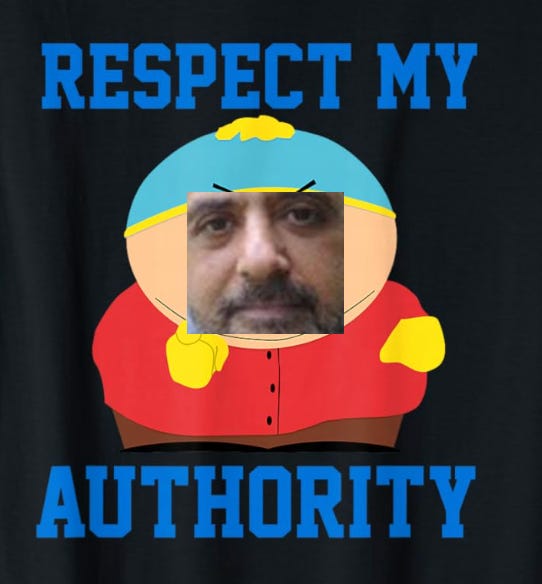
Unfortunately, being the “Living Mirror” does not come with much of a pay check, and taking a job as a mechanic or grocery clerk, would be a little demeaning for such a ‘World Teacher’. From what I can gather, Wahid currently lives humbly in an apartment with his young daughter, with a low to moderate income, and is said to be reliant on family and others for help. This seems to have been the sort of situation he has always been in. Although, from his desk and computer there, he rules over the entire world!
Azal’s ideas, theology, cosmology, who to hate, etc are generally disseminated primarily through academic-style publications, blogs, and social media, blending historical analysis of Bābī manuscripts with personal theological interpretations. His claims are highly niche, contested by Bahá’ís (who view Subḥ-i-Azal as a nominal interim leader at best) and largely ignored by broader Islamic or academic circles.
My searches for “scholarly endorsements of Wahid Azal” or “academic citations” yielded zero positive affirmations from professors, journals, or institutions. His work is not referenced in peer-reviewed outlets like Journal of Sufi Studies (Brill) or Iranian Studies. No academic reviews praise his contributions; instead, mentions are incidental or critical (e.g., Alexander Knysh in a Traditionalist blog calls his Maryamiyyah arguments “an attempt to gain cheap notoriety”). He presented a 2008 paper at University of Queensland’s “Alternative Expressions of the Numinous” conference on Islamic white magic—his only documented academic venue, but no proceedings or follow-up citations came out of it.
There is no single “official” document universally recognized as authoritative on his claim, as it stems from his self-published and online works rather than a centralized Bayānī institution. Although, his Academia.edu profile, hosts a repository of his writings explicitly addressing his theology, the Bayānī lineage, and his role as the “Living Mirror”, as well as some well written and interesting articles on Iranian history, Islamic mysticism. Since taking on the title of ‘Sheik’ (more on that later) he has issued a bunch of fatwās of his own against various people, countries and institutions such as Andrew Tate, Israel, the Islamic Republic of Iran and the leader of the Ahmadi Religion of Peace & Light (who holds similar messianic claims to Wahid), etc.
Reviews on Wahid’s book, The Completion of the Arabic Bayān: And the Eight Paths and other sources, also clearly indicate some sort of Messianic complex at play – “this is a claim to being a divine Manifestation equal to (or greater than) the Báb, but with much less capacity to engage in the spiritual depth that the Báb achieved” and “Persons reading this should understand that the “completion” of the Bayan represents a claim by the author to be ‘Him Whom God Shall Make Manifest’ and a claim to be the Manifestation of God after the Bab and Mirza Yahya [Subh-i-Azal]. That claim directly conflicts with both Babi and Baha’i understandings.” Amazon
Unfortunately for Wahid, his claims failed to find much support among the Baháʼís, and one can only suspect, herein lies the origins of his conflict with this religious community.
In 2010, a letter written in the 1990’s by a Terry Culhane, which lamented Wahid’s messianic claims, appeared in a blog at Iranian.com, with the title ‘A Sincere Open Letter posted on the Web in 1990s about Nima-Wahid Azal-NUR from his close Friend, Terry’ and an opening from a Bahá’í author, who stated he was posting it as it gave some insights into Wahid’s 2010 attacks on his religious community. [Spelling errors are as is in the original posts, as with all following citations in this article]:
UPDATE 2010
This old blog was never intended as an attack, but a sincere letter (not private) but googled on the web written by a concerned friend of “NUR” / “AZAL”.
When Nima Hazini/wahid Azal, first appeared here and started attacking Bahais, accusing everyone from Jahanshah to many regulars of being paid sympathisers, promoting a site called source watch, of which he is an ardent anti Bahai contributor. The level of outrage and attacks became so disturbing that it was thought, it might be of interest to share a letter written by a concerned friend of his, that had been widely available on the web, written in the late 90s about Nima Hazini, Wahis Azal, “NUR”etc..
A rather sincere and perceptive account of what the writer thought of his freind “Nima Hazini” , his strengths, his weaknesses and the self seeking path that he had chosen; one that, today, considering the passing of more than ten years and the record of his writings, deeds and outrageous behaviour, is a remarkable account of what these pages have subsequently confirmed and have come to know as “NUR” or “Azal”.
A Public Open Letter Written, and posted on the Web by Terry Culhane, a close friend of Nima Hazini, AKA “NUR”, “Wahid AZAL”, NUR AZAL etc. [This is the original letter from the 1990s]
To those it may concern :
I have followed this latest incarnation of Nima Hazini with some interest and a great deal of sorrow. After much prayer and meditation I find it necessary to mention the following.
I have known Nima for nearly eight years Unlike most of you I have met him in person on more than one occasion and he has been a guest in our home in Omaha Nebraska. In short we have been friends in the real world and not simply names in cyberspace.
In those eight years I have observed Nima cycle through a number of activities political as well as spiritual including more than one dalliance with the mystical dimension. Nima is a very bright young man and has used that intellect to keep the”mystical” at bay. It is one thing to grasp mystical realites as an intellectual , it is another all together to know it at the level of the heart. Nima has always used his mind to keep his heart at bay. You see mysticiam, in the final analysis, is about heart surrender and giving up the personal will. That is something Nima has been unable to do. One must be able to not only talk the talk but also tp walk the walk. For whtever reasons Nima has been unwilling the engage the heart surrender in order to walk the walk
Rather he has over the past two to three years dug himself such a deep hole of anger, bitterness and angst as to find little or no way back to the Best beloved. If there is anything Nima has craved all these years it is what might be called salvation or redemption. I have watched him move so far in to that hole that salvation continued to allude him. It now appears rather than surrender his heart he has chosen another route. That one is to achieve salvation by proclaimng himself as his own savior. There is a profound irony in this in that what he most desired and needed he was unable to allow himself to obtain without engaging the supreme act of narcissim, that of proclaming himself his own savior, messiah or manifestation whichever concept you prefer. It is a terrible shame and one fraught with spiritual peril.
Nima, like all,human beings has numerous imperfections which make him anything but the “perfect man” for the age. I will not discuss those imperfections as the were divulged as a result of a friendship of the past. Out of respect for that memory I will only note they are not the sort of things that make one a Messiah.
As Nima well knows I have been for years attracted to ,blessed and cursed, as the case may be, by an abiding attraction to Baha u llah as the Maid of Heaven. We have discussed this numerous times in person and by telephone . I have written about the subject as well in terms called the BahaMaiden Dialogue. In our last telephone conversation in early Novemnber we talked about this and I cautioned him ,once again, about the fear and danger inherent in aproaching that glorious reality. One must leave the ego and will behind and that can be a frightening experience indeed which is why mystical encounter has been variously described as awe filled or awe -full. I suppose then it is no surprise that he gave no indication to me as of early November of his latest interest in the subject and his subsequent pronouncements.
I will say after much prayer that my own recent experience of that Maiden confirms from Her that Nima never has been, is not currently, and never will be anything approaching a messiah, Him whom God shall make Manifest, or anything approaching the spiritual return of Quddus or any of the great Babi’s.
It is my prayer and hope that Nima will some day engage the heart surrender and know the joy as well face the fear that comes with such surrender. It will require he let go of his anger, hatred, and bitterness and let go of the desire , so common in children, of wanting the entire world to be their personal “oyster”. If and when that day comes we will once again be friends. In the meantime I can only watch and pray from a distance knowing full well that such things are impervious to reason or evidence.
warm regards,
Terry Culhane
This letter from Terry Culhane predates all Wahid Azal’s Bahá’í internet drama by years and was written by a personal friend who watched the messianic turn happen in real time. From what I can see his attacks on the Bahá’í originated with their rejection of his claims of succeeding the Bahá’u’lláh.
Another comment from Iranian.com emphasizing rejection, tells us:
My purpose here is to expose the fake and fraudulent “truthseeker”, also known as Wahid Azal and Nima and Steve and Hazini and many other names according to which fraud he is propogating. We know him well in Australia where he is known as a drug dealer. But, his purpose, like many American Christians who have confused themself with a prophet (Jim Jones), he seeks to gather followers and prophet from their stupidity. The reason he is antagonistic to the Baha’i Faith has nothing to do with Tahirih Justice Center, Imbra or anything else he knows nothing about. It is because he is a follower of the Bab, an Azali, and the founder of the Baha’i Faith, true or not, proclaimed himself to be the successor to the Bab. Because there are still many Babis, like Jews awaiting the Messiah, he has no proclaimed proclaimed himself to be that Messiah and wants Babis to follow him. (Iranian.com)
For his part, Azal disputes nearly all negative claims made about him and attributes them to a long-running Baháʼí smear campaign; his own writings and defenses are linked throughout. And to be clear, the history, accusations and criticisms above are hearsay from old forum comments and other sources, not all of this may be true. And I am not a defender, or ‘agent’ of the Bahá’í. My own area of research interest generally follows tracing cannabis’ role through history in magic and religion, and early on in that research I saw the strict and clear prohibitions of intoxicants in the Bahá’í religion. Any interest I have in Bábís, or the Bayán, came directly through my
The Baha’i
We’ve already looked at a bit of their backstory and how it intercedes with Wahid’s claims. The Baha’i Faith, which as noted, originated in 19th-century Iran, teaches the unity of all religions and humanity. In regards from what I can see of the current situation, the Bahá’í Faith is generally regarded as one of the cleaner, lower-drama religions in modern history, especially when compared to groups that regularly make headlines for financial fraud, sexual abuse cover-ups, or cult-like control (e.g., Scientology, Jehovah’s Witnesses, some branches of Mormon fundamentalism, Catholic Church or certain high-control evangelical megachurches). Since 1979, the Iranian government has systematically arrested, executed, imprisoned, and discriminated against Bahá’ís. This is the source of most negative news stories about the Bahá’í Faith, but it is State persecution, not internal Bahá’í wrongdoing. In respect to that, Wahid has specifically threatened Bahá’ís online with comments like “I will also find out the names of your Bahai [sic]contacts one by one and disclose this information directly to Iranian authorities” (Wahid Azal). This a threat taken seriously given the Islamic Republic’s persecution of Bahá’ís.”
Like Jehovah’s Witnesses, they do have a practice of actively rejecting former members “shunning” and a handful of very vocal ex-Bahá’ís (e.g., Juan Cole, Denis MacEoin, Francesco Ficicchia in the 1980s, or the “Talisman” mailing-list dissidents in the 1990s, which included Wahid, then Nima Hazini) were removed from membership or sanctioned. These cases are sometimes framed as “Bahá’í thought police” scandals, but the numbers are tiny (a few dozen high-profile cases in 150 years).
Bahá’ís also reject “Covenant-breakers”—people who actively oppose the appointed leadership after Bahá’u’lláh. Contact with declared Covenant-breakers is forbidden. Critics call this cult-like; Bahá’ís say it’s necessary to protect unity. Again, the actual number of people ever declared Covenant-breakers is extremely small (fewer than 50 worldwide since 1921). Certainly Wahid, and anyone who supports him would be included here. However, in this respect, claims of spying on former or troublesome members, along with maligning and responding by the Bahá’í, have been recorded by other sources beyond Wahid.
Virtually no documented cases of widespread child abuse, clergy sexual misconduct, or large-scale financial fraud at the institutional level. Some criticism in the 2000s–2010s about slow or inadequate handling of child abuse reports at the local level (similar to many other religions at the time), but no evidence of institutional cover-ups on the scale of the Catholic Church or Jehovah’s Witnesses. Minor incidents do occasionally surface, but isolated cases of individual Bahá’ís committing crimes (fraud, assault, etc.)—normal for any group of 5–8 million people.
Compared to almost any other religion or new religious movement of similar size and age, the Bahá’í Faith has remarkably few scandals originating from its own institutions or leadership. Most negative press is either (a) Iranian government propaganda, or (b) complaints from a small number of disaffected ex-members about authoritarian governance and shunning. There is no significant history of sexual abuse rings, financial corruption at the top, or violent extremism.
However, while Azal remains a polarizing and isolated figure, some of his criticisms of Baháʼí organization are echoed by other ex-members and independent researchers.
Wahid’s One Man War Against the Bahá’í
Based on the view that the the Báb appointed Ṣubḥ-i-Azal as his successor; that Bahá’u’lláh’s claim was false; and that he himself was the inheritor of Ṣubḥ-i-Azal’s office, Wahid began his one man war on the Bahá’í, on the battlegrounds of a host of sites dedicated to the Bahá’í and the Bayán traditions.
In regards to Wahid, it should be noted that almost all the harshest personal attacks (drug dealer, death threats from family reframed as Bahá’í threats, “mentally ill narcissist,” etc.) originate from 1990s–2010s Bahá’í forums (talk.religion.bahai, Iranian.com) or ex-Bahá’í blogs responding to his relentless polemics. However, anyone looking through those forums will see that Wahid gives as good (or worse) than he gets—threatening rhetoric, doxxing accusations, etc.—so both sides escalate. Neutral observers usually describe it as a 25-year flame war no one else cares about because Bayānīsm has so little of a community left.
Wahid Azal vs The Bahá’í: The Forum Wars
Regarding Wahid – Now, contextualized by his psychiatrists under the rubric of a “Paranoid Schizophrenic” with “Delusions of Godhood” rather than, technically speaking, “the Self-Disclosed Theophany of Beautific Magnificence and Majestic Scintillance”; the origins of N. Wahid Azal are to be found during the early twenty first century within his trolling and cyberstalking of the Baha’i that occurred in talk.religion.bahai Usenet group. During that period, and while in exile after being expelled from nearly every forum and email list to which he had ever subscribed; N. Wahid Azal proclaimed himself to be the universal messiah and penultimate divine messenger (or ‘manifestation of God’ in Baha’i technical language) come to establish a new global religious order that is to eventually succeed and supplant all religions and belief systems throughout the world. In time Azal has pioneered a new form of mind control cult made up only of himself. – What if God is a Troll? | The Mendacity of N. Wahid Azal

Image from the The Fourth Revolutionary War Blog
Wahid’s public persona is defined by hyper-aggressive online feuds, often getting banned and returning with sock puppets, that have produced a long trail of documented controversies. Below are the best-substantiated ones, drawn from forums, blogs, Reddit archives, and academic side-notes (none are criminal convictions, but many involve platform bans and mutual libel threats). Critics, who in some cases seem to have knowledge of his past history refer to him as a “Bacheh Sosol” (بچه سوسول) “mummy’s boy” or “spoiled kid”, who relies on family money to survive.
The action begins in various posts in forums in the early 2000s, where Wahid claimed the Bahá’í seek World domination “…it is the Haifan baha’i cultists and those who follow this pernicious and malicious creed whose agenda is nothing short of the imposition of a totalitarian New World Order…” (Wahid, 2003). He States that the Bahá’ís “agenda is nothing short of the imposition of a totalitarian New World Order (I ask people to read their ‘Revelations’ and find out the aims of the Antichrist as spelled out in that Book).” (Wahid, 2004). In Wahid’s view the Bahá’í as a “sleazy, satanic organization”.
Wahid has claimed that people responding to him on Bahá’í forums, were paid as much as $10,000 a year to do so ““Mark Foster has admitted in the past that the presence of various individuals on the internet contains a financial dividend of up to $10,000.00 + per annum …to its various online agents” (Wahid, 2002). A claim Foster vehemently denied “Nima, [this was before the name change to Wahid Azal]I never told you that I had received $10,000, a portion of that amount, or any other amount from the Baha’i Administration. It is simply not true. However, believe what you want”. A Sourcewatch page documenting this reported that “despite the early evaporation of the factual basis of the story, he just keeps repeating it, and some of his readers get confused and believe it. It is a propaganda technique: lie and repeat. Oh, I see in 2004 he was still saying that Baha’is were paid to be on the internet, and named you as a Baha’i internet agent.” In regards to this Wahid has stated:
Obviously if these people had real jobs with real lives they would not be continually wheeled out to these sites to respond to every single post posted by any percieved given enemy of their corrupt, sleazy, satanic organization and cult which puts Scientology to shame. Know that your secrets are all out and you will be brought to account very soon.”
“You cultists in your silly delusions thought you can stop me or the new Cause by trying to persecute and nip the new movement in the bud. Hah! The Bayaniyyah is growing by leaps and bounds and soon it will overshadow all of you. Therefore your own days are numbered and the crimes you have committed against humanity will soon be exposed for the whole world to see. As I said, I am the meteor here to cast you all out and I have drawn out my Sword of Truth to hack off the serpents head of falsehoods, deciet and lies which you sons and daughters of the Evil One represent. As I am the Master of the Moment (Sahib-e Zamaan), this time none of you will be getting off easy.” – Wahid Azal, December 2002
In a 2007 thread titled “To Baha’is harrassed by Nima Hazini aka Wahid Azal” on an explosive Iranian Google Groups page, we find a back-and-forth full of accusations from both sides, with people offering to testify in court against him for harassment/libel. Azal fires back defiantly, basically challenging anyone to sue him, denying various claims and making his own accusations about the “Baha’i Internet Agency” stalking him. Wahid used a sock puppet here with the usersname ‘Death to Bahaism’ and resorted to threats of hanging/lynching his enemies. Resulting in responses like this:
The death threat by the IRI agent Nima Hazini shouldn’t go unanswered. “lynching/hanging” is a practice these bastard have done on young innocent Bahai girls and Iranian students and this bastard wants to export it to Australia “lynching/hanging” the people that don’t agree with him. Son of a bitch wants to enjoy the freedom of the west and lynch and hang the ones don’t agree with him. He must be stopped. Don’t igonre him. He is dangerous”
One of the people that Wahid has wanted to see lynched was Dr. Susan Maneck, an Associate Professor in the History and Philosophy Department at Jackson State University where she teaches courses in the Middle East and South Asian History. she is a prominent American Baháʼí scholar and historian, often active on forums like talk.religion.bahai (TRB) in the late 1990s and early 2000s. She authored works on Baháʼí history and was seen by critics as a defender of the mainstream (Haifan) Baháʼí organization. Their “conflict” was not a formal debate or scholarly exchange but a prolonged, highly acrimonious series of online confrontations spanning the early 2000s, primarily on Usenet groups (e.g., talk.religion.bahai, soc.culture.iranian) and related forums. It stemmed from deep sectarian divides between Bayani/Babi revivalism and Baha’ism. Maneck defended standard Baháʼí historical narratives that portray Subh-i-Azal negatively and view Azali/Bayani adherents as a tiny, extinct, or irrelevant fringe. Azal in return accused Maneck (and other Baháʼí online defenders) of being part of a “Baha’i Internet Agency”—a supposed paid propaganda operation—and labeled her an informant or enforcer for the Baháʼí administration.
Azal’s rhetoric toward Maneck was extreme and personal, including accusations of her being an “arch-demoness,” and “Dr Maniac (the Antichrist of My Revelation)”, who is a liar enabling a cult. The attack included veiled or direct threats like “Susan Maneck will indeed hang for her all crimes”! In one 2002 incident referenced by Azal himself, Maneck reportedly called him “Azalih” or likened him to a demonic/historical villain figure in Baháʼí lore (similar to “Avarih,” a pejorative for covenant-breakers). The exchanges involved mutual accusations of spying, harassment, and misinformation, with Azal claiming Baháʼís (including via Maneck) monitored or reported him across continents.

Susan Maneck, Phd. “Susan Maneck will indeed hang for her all crimes. That is a promise, no threat!” Wahid Azalon.
In response to Wahid’s barrage of inflammatory comments, a Sam Ghandchi was then trying to initiate a group legal action against Wahid for harassment and defamation:
If you are filing law suit against Nima Hazini’s harrassment of you on the Internet for libel and defamation, I am willing to testify in the court on your behalf. I do not care if he is workign for Islamic Repblic of Iran or for any other entity. He says I have been in Berlin doing this and that whereas I have never been to Berlin in my whole life. And when I challenge him, he makes more libel and defamtion rather than apologizing. Nobody has a right to make libel and defamtion and get away with it. We are here for discussion and learning not libel and defamtion.
All the Best,- Sam Ghandchi, Editor/Publisher IRANSCOPE
http://www.iranscope.com http://www.ghandchi.com
From what I can see, no lawsuit have ever happened, or much else outside of the internet, just the classic heated Usenet drama.
In 2009 we find Wahid has moved the battle over to Iranian.com in an archived blog post with the title ‘Ex-Bahai turned Sufi spied on and harrassed between continents by the Baha’i Administration’ (We will get into the Sufi stuff later). Comments here directly references him claiming ownership of a Glock .357 (and an “Israeli-made semi-automatic .357” plus a 12-gauge shotgun in some spots), threatening to “empty a clip” specifically at members of the alleged “Baha’i Internet Agency”. it also ties into Wahid’s claims of the broader harassment/spying narrative across continents by the Baha’i.
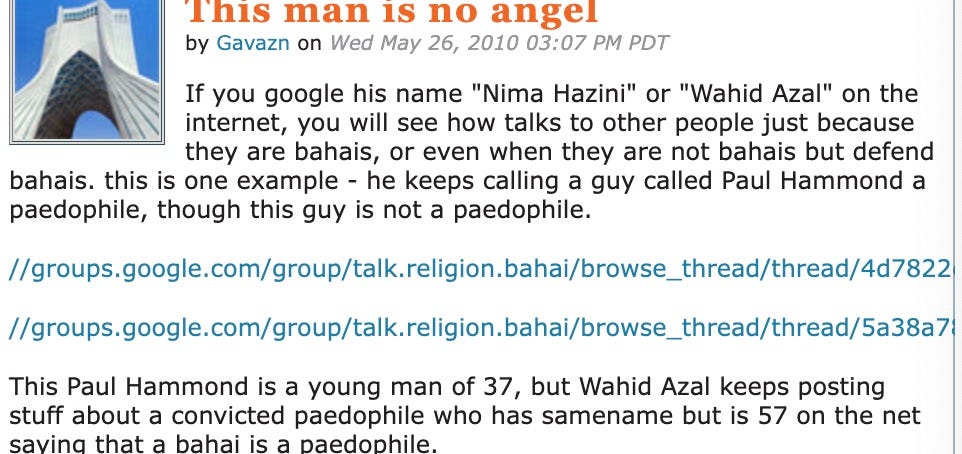
Another claim that I have seen repeated, is that Wahid has falsely accused his detractors by claiming there are pedophiles. This has happened with former allies on the anti-Baha’i front as well.
“…there is a slanderous and very disturbed individual by the name of Nima Hazini, Aka: Wahid Azal, Aramis, One, Abraxas, & etc…likely the one now posing as ‘Aurora Nur’ in this thread. He also considers himself the ‘Grand Shaykh, Imám ‘Abdu’l-Haqq Wahid Azal Wahdatalishah…. He actively targets people and organizations – going so far as maintaining a ‘kill list’ – who believe in Baha’u’llah in order to slander their reputation. He has said some of the vilest, most repugnant things (not worth repeating), and has threatened people with physical violence; anyone interested in independently ascertaining the truth can find hundreds of references online by searching his name and aliases; his exploits are extensive and precede him.”
After moderators have warned him for inflammatory posts, Wahid is known to have created sock-puppets to infiltrate the sub, doxxed users, and denounced ex-Bahá’ís as “racist white supremacists” or “Zionist agents.” He has been Reddit-banned site-wide at least twice for doxxing and threats (e.g., “empty a clip” into Bahá’ís).
Wahid had other conflicts at Iranian,com, and claimed that for a time he had the whole site removed:
“I took down the old Iranian.com and exposed the people behind that Bahai-Zionist website. And find out more about Denis Giron’s aborted protege Paul A Hammond and how I hanged him (or, rather, how he hanged himself) with the very thing I publicly accused him of. I don’t make empty threats because I only play to win.” (Wahid Azal, 2016)
Wahid Azal has repeatedly claimed that he “took down” the old Iranian.com website, exposed its alleged “Baha’i-Zionist” operators, and—most gravely—that he psychologically “hanged” British online debater Paul A. Hammond (d. December 2022) by publicly accusing him of pedophilia, implying the accusation drove Hammond to suicide. He has also described Hammond as the “aborted protégé” of another former adversary, Denis Giron. None of these assertions withstands scrutiny. Iranian.com ceased operation in 2016 for ordinary financial and editorial reasons; no credible source has ever linked its closure to Azal’s campaigns. Hammond’s death in late 2022 was quietly noted in small ex-Baha’i circles with no indication of suicide—natural causes or unreported illness in old age remain the only documented explanation, and the “hanged himself” narrative originates solely from Azal’s own subsequent boasting.
The accusation that supposedly “destroyed” Hammond was a deliberate 2008–2009 smear on the Usenet group talk.religion.bahai in which Azal spammed threads (e.g. “Paul Hammond pedophile!” and “PAUL ANDREW HAMMOND: CRIMINAL HOMICIDAL KILLER”) with news reports about an unrelated Paul Andrew Hammond convicted in Bedfordshire of possessing child-abuse images. The Usenet participant Paul A. Hammond (pahamm…@onetel.net.uk) immediately pointed out the mismatch in location, age, and details; the two men were never connected by any court, police, or media source. Azal employed the identical name-conflation pedophile tactic against Denis Giron, another talk.religion.bahai regular who had briefly hosted anti-Baha’i material on his now-defunct Freethought Mecca site before disengaging from Azal entirely. Giron repeatedly offered to be deposed under oath to refute the allegations—an offer Azal ignored while continuing to recycle the claims for over a decade.
These episodes illustrate a consistent pattern in Azal’s online activity since the early 2000s: unsubstantiated conspiracy theories about a “Baha’i Internet Agency,” escalation to extreme personal libel (paedophilia, murder, Zionism), and, years later, retroactive claims of victory when former opponents die or withdraw from the internet for unrelated reasons. Far from evidencing real-world influence or investigative success, the Hammond and Giron cases—archived in detail on groups.google.com/forum/#!forum/talk.religion.bahai—remain textbook examples of sustained digital harassment that achieved nothing beyond alienating virtually every discussion space Azal entered.
Specific threads/examples mentioned earlier (all still active as of November 2025):
- Paul Hammond directly responding to Azal’s false paedophilia accusation (2008):
- Azal spamming the unrelated “Paul Andrew Hammond” conviction story and calling the TRB Paul Hammond a “CRIMINAL HOMICIDAL KILLER” (2009)
- Long thread containing Azal’s smears against both Paul Hammond and Denis Giron, including the “Baha’i Internet Agency” conspiracy claims (2009)
- Another representative Azal attack thread on Denis Giron (accusing him of paedophilia, Zionism, etc., 2009–2010)
- Thread where Denis Giron offers to be deposed under oath to refute Azal’s allegations (Azal ignores it and keeps spamming)
In 2011 over on the Baha’i forums, Wahid was threatening lawsuits and posting a video he had denouncing the religion. When his original comments were deleted, he return as the sock puppet incarnation Down with Bahaism and stated “I am fully within my right to record a Youtube video warning the general public about the fact that I believe the Haifan Bahai organization to be a dangerous New World Order cult just as you Baha’is put up enth number of propaganda videos on Youtube promoting yourselves and denouncing your political enemies, like those you call covenant breakers.” When the Baha’i on the forum responded with love and concern, Wahid wrote:
In your conceited smugness, i.e. love bombing, you Haifan Baha’is sound typically like Christian fundamentalists (who happen to outnumber you btw).
May you indeed be guided to the Truth that Bahaism is a cult and Mirza Husayn ‘Ali Nuri Baha’u’llah was a charlatan, a liar and a murderous thug, and that Bahaism is a tool of Anglo-American and Zionist imperialism and neo-colonialism.
In any case, if the administrators of this site get any big ideas to remove my response one more time, they should think twice: ‘Nima Wahid Azal’ Bahai Forums (2016)
From what I can see online, Wahid issued no court cases against the ‘Haifan Baha’i’, but the whole thread is a pretty good example of how Wahid has continually terrorized the Baha’i’, threatened violence law suits, defamed people and more over 175 year old issues, like who succeeded the Báb.
The feud is still ongoing, recently Wahid posted the article Bahāʾism as a Western Soft-Power Replacement Theology, a conspiracy theory where the west is priming the Baha’i, as a replacement for Islam:
Bahāʾism is like an Islam declawed. A monotheism pre-adapted for polite society. It preserves the optics and aesthetics of prophetic religion while quietly neutralizing its revolutionary core. In this sense, Bahāʾism operates as a “managed substitute”—spirituality engineered to be non-threatening, infinitely agreeable, and structurally obedient. It is, in effect, universalism without teeth, but one which specifically serves Western colonial and neocolonial agendas.
Historical Evidence of Elite Facilitation and Post-Revolution Iran, Media Framing as “Good vs. Bad Islam,” and Bahā’ī as Managed Antidote to Islam. (Wahid Azal, 2025)
Wahid Azal’s accusations—that the Baháʼí Faith is a deliberately engineered Western/colonial soft-power project designed as a pacified “replacement theology” to neutralize Islam, created through things such as British intelligence ties, Freemasonry, and imperial networks—are not grounded in credible evidence. These claims recycle long-debunked conspiracy theories repeatedly promoted by the Iranian government and some Islamist circles, but they find no support in mainstream academic scholarship or archival records. Neutral investigations by historians, human-rights organizations (UN, Amnesty International, Human Rights Watch), and governments outside Iran have consistently found zero evidence of espionage, foreign sponsorship, or orchestration by Western powers. The faith’s universalist, non-violent principles and the location of its world center in Israel (fixed under Ottoman rule in the 1860s) make it an easy target for such claims, yet the only documented reality is ongoing systematic persecution of Baháʼís in Iran, recently classified as a crime against humanity. Azal’s article is overtly sectarian polemic rather than objective analysis. If anything, it will only contribute to the ongoing pogrom against the Baháʼí in Iran.
Endangering the Lives of the Baha’i
The Baháʼí Faith, has been viewed by the Islamic Republic’s clerical establishment as heretical and a threat to Twelver Shia Islam’s supremacy since the 1979 Revolution. The Iranian Constitution does not recognize the Baháʼí Faith as a legitimate religion (unlike Zoroastrianism, Judaism, and Christianity), labeling it a “deviant sect” and enabling systematic discrimination. A confidential 1991 memorandum approved by Supreme Leader Ali Khamenei explicitly outlined a policy to “block the progress and development” of the Baháʼí community, denying them higher education, government employment, and influential positions while expelling them if identified. This state-sponsored framework, combined with propaganda portraying Baháʼís as spies linked to Israel (due to their world center in Haifa) or foreign agents, has fuelled decades of persecution, including over 200 executions in the 1980s, arbitrary arrests, property confiscations, and offers of freedom in exchange for recanting their faith—evidence that repression targets religious belief rather than security threats.
In recent decades, persecution has intensified amid national crises, such as post-2009 election unrest, economic protests, and Iran-Israel tensions, where the government scapegoats Baháʼís to deflect blame and incite public hatred through state media campaigns. Human Rights Watch documented in 2024 that this constitutes the crime against humanity of persecution, involving a spectrum of abuses: denial of university access (forcing reliance on underground education), economic strangulation via business closures and pension revocations, cemetery desecrations, and vague national security charges for routine religious activities like teaching children. Arrests often follow home raids without warrants, with prisoners facing torture or prolonged detention; Baha’i women, in particular, experience intersectional oppression, comprising the majority of recent detainees amid broader gender-based repression.
As of late 2025, the situation remains dire and escalating, with ongoing arbitrary arrests (hundreds in recent years), prison sentences totalling thousands of years combined, and innovative tactics like property seizures via text messages under misuse of laws intended for illicit gains. Dozens of Baháʼís are imprisoned, cemeteries continue to be vandalized or blocked, and farms/homes confiscated—often targeting women—to impoverish families and erase community presence. International bodies, including UN experts and the European Parliament, have condemned this as systematic cultural cleansing, yet Iran’s government persists, using regional conflicts to justify heightened repression while ignoring calls for accountability.
Wahid Azal vs Freedom of Religion Advocates
Wahid’s war on the Baháʼí (and as we shall see other religious groups) caught the attention of international religious freedom activists. Rosita Šorytė is a Diplomat for the Ministry of Foreign Affairs of Lithuania, who has specialized in disarmament, humanitarian aid and peacekeeping issues, with a special interest in the Middle East and religious persecution and discrimination in the area. She wrote an article in Bitter Winter: A magazine on religious liberty and human rights, that was also published in a journal on the topic, ‘Wahid Azal’s Anti-Cult Hallucinations’ where she noted:
Azal once posted, answering one of his critics: “I don’t just live in a spider’s house. I am the Spider itself that draws in its prey into its web for the kill! Taking down people like you and your master is what I do for a living. Now, I will also find out the names of your Bahai [sic]contacts one by one and disclose this information directly to Iranian authorities.” Considering that members of the Baháʼí faith are regularly tortured and sometimes killed in Iranian jails, the threat should be taken seriously.

In response Azal has argued that CESNUR (The Center for Studies on New Religions) which Rosita Šorytė is part of, works on behalf of the Vatican and “has created and funded cults, which he says were invented to create discord within the Shia community! (We will get into his Shia claims later).
Showing the Baháʼí feud lives on, at least in Wahid’s mind, more recently, when Meta suspended his Facebook twice in 2025; he blamed “Bahá’í Internet Agency” lobbying.
The Dale Husband Saga
Dale Husband is a former Baháʼí turned Unitarian Universalist and outspoken ex-Baháʼí activist, who runs a blog called “Dale Husband’s Intellectual Rants” focused on religious skepticism and critiques of organized religion. His relationship with Wahid Azal began as a notable online alliance in regards anti-Baháʼí rhetoric, but devolved into a bitter, public feud marked by accusations of betrayal, slander, and legal threats. Below, I’ll break down how it began and ended, based primarily on Husband’s detailed blog documentation and cross-referenced public records like podcasts and Reddit posts.
How It Began: Shared Activism and Growing Camaraderie (Around 2010–2019)
Early Interactions (2010): The connection started on Husband’s WordPress blog during a lengthy debate thread about Baháʼí doctrines (specifically rejecting the “Guardianship” in Baháʼí leadership). Azal participated actively, and they bonded over mutual criticisms of Baháʼí authoritarianism. Azal reportedly called Husband a “brother in arms” in comments, framing their collaboration as a united front against what they saw as the Baháʼí Faith’s cult-like elements. This marked the start of a decade-long online friendship rooted in shared intellectual skepticism and activism.
Deepening Alliance (2010s): Over the years, they collaborated informally through blogs, forums, and social media (e.g., Reddit’s r/exbahai subreddit). Both positioned themselves as fierce critics of Baháʼí institutions, with Azal often amplifying Husband’s writings. Husband describes this period as one of mutual respect, where Azal praised his work and they exchanged ideas on topics like religious hypocrisy and Unitarian Universalism (Husband’s later affiliation).
A youtube video podcast featuring Wahid Azal and Dale Husband back in friendlier times.
Peak Collaboration occurred around 2019, The high point was a joint podcast recorded by Azal, titled something along the lines of “A Podcast Interview Featuring Myself and Wahid Azal”, which I believe to be the video above, which had been removed by Wahid but reposted by Dale Husband with the comment: ”
After Wahid Azal and I became enemies, he was so desperate to eliminate this podcast from YouTube that in November of 2021 he filed a false copyright claim against it and I had to file a counter notification to get it back. He must know that I can use this video against him, as a warning to others to never trust him enough to collaborate with him on future podcasts!
In the video, they discussed Baháʼí critiques, Husband’s shift to Unitarian Universalism, and personal anecdotes. Husband had also intervened on Reddit to protect Azal from a potential ban in r/exbahai, further solidifying their bond. At this stage, Husband viewed Azal as a key ally, and their exchanges were publicly amicable. This phase was fuelled by a common enemy (Baháʼí orthodoxy) and aligned worldviews, turning casual commenters into collaborators.
How It Ended: Betrayal, Slander, and Escalation (Late 2019 Onward)
Initial Fracture (Late August–Early September 2019): Just two weeks after the podcast, tensions erupted on Reddit. Azal accused Husband of being a “Baha’i Troll Working for the BIA” (Baháʼí International Association, implying Husband was a covert Baháʼí infiltrator). This came amid subreddit moderation disputes—Husband had defended Azal, but Azal turned on him, allegedly for not fully aligning with his views or leadership in anti-Baháʼí spaces. Husband was stunned, posting a podcast titled “Betrayed by Wahid Azal” to document the “backstabbing.”
Escalation into Public Feud (September 2019–2020): Azal was expelled from r/exbahai anyway, but not before firing Husband as a moderator from his own subreddit (realexbahais). Azal began a smear campaign, labeling Husband a racist, pedophile, and Baháʼí shill based on twisted interpretations of Husband’s old blog posts (e.g., a 2017 entry comparing himself unfavourably to Roy Moore to highlight personal flaws). Azal produced videos like “Is Dale Husband Retarded Part 1” and “Dale Husband Confesses to Being a Paedophile,” uploaded to platforms like the Internet Archive and YouTube, which Husband later had partially removed for violations.
Husband responded to this, with claims that Azal had called him a “pedophile” by deliberately misreading a 2017 blog post condemning Roy Moore, and felt he was being targeted by some of the internet stragglers that Wahid had accumulated by that time, as he noted in a blog post – Wahid Azal and his Bayani gang hit a new low. Husbands comments in a Google Group post, Wahid Azal is now confirmed to be a BLASPHEMER is particularly amussing here:
Dale Husband, Feb 2, 2020,
So now let’s back up a bit. You claim to be the return of Subh-i-Azal…..or should I call him Sub-e-Asshole? Why him and not some bigger historical character such as Genghis Khan or Isaac Newton? Why some nobody who picked a fight with Baha’u’llah and lost so badly that no one else gives a shit about his memory? That’s not good for public relations, mate.
Those caused Wahid to give a bombastic response in defence of Subh-i-Azal, that included the line “ His passing as the first Mirror of the Bayan He is still kicking Baha’i hide in His Return as the second Mirror of the Bayan.”
Ongoing Hostility (2020–Present): The rift widened into mutual legal and online harassment. Azal filed dozens of bogus YouTube copyright strikes to erase old collaborative videos where he and critics appeared friendly, leading to temporary takedowns (Husband successfully countersued). Husband responded with blog entries like “Destroying Wahid Azal’s Credibility Forever!” (2020), compiling evidence of Azal’s “treachery” and hypocrisy (e.g., Azal stealing Husband’s content while accusing him of defamation). Azal’s followers (his “Bayani gang”) amplified attacks, including doxxing attempts and threats. Husband blocked Azal on platforms and extended olive branches to Azal’s other critics (e.g., Denis Giron, Nate Abookire) in 2020, but reconciliation failed. By 2023, Husband declared the feud “over” in a final blog post, but sporadic X posts, and other things from Wahid show lingering barbs.
Wahid Misgenders a former Co-host
In another case of turning on a colleague, Wahid uses abusive language, intmidation and misgendering. DC Shepard is a nonbinary and transgender atheist who ended a 6 year marriage to a Baha’i woman they described as abusive. Shepard also felt manipulated by the faith so they began a podcast, The Hidden Faith: A Truly Independent Investigation of the Baha’i, and this and their appearance on another podcast, caught the attention of Wahid Azal. DC Sheppard and Azal formed an allegiance and they agreed to cohost the ‘Hidden Faith’ podcast together.
Shepard, felt that Wahid was lacking in his contributions to the project, and that he also tried to take control of the content. Things came to a head with a popular episode they did together entitled The Universal House of Justin Baldoni-Faced Lies and they requested Wahid Azal take down the copy of the video he posted on his own channel with no response. They feared retaliation by Wahid if they attempted a YouTube removal request.
As Shepard recounts, Wahid resented questions posed by DC Shepard over the thin and unverified research Wahid had contributed about Baha’ullah supposedly ordering the murder of Azalis, and DC’s alarm over a since-deleted threat by Wahid to “skullfuck” a Baha’i he was arguing with on Reddit until they “moan[ed]to the Abha Kingdom.” (Presumably based on that being the name of the Baha’i afterlife). When Wahid refused to retract his threat, Shepard tried to bury the hatchet, and in response Wahid withdrew from The Hidden Faith and Shepard later deleted his associated videos from the podcast playlist at the request of another ex-Baha’i Wahid had harassed.
Surprisingly, Wahid wanted to continue the podcast, but things finally ended when they were covering the Baha’i Universal House of Justice’s close association with Israel and aloofness towards mediating the conflict or providing humanitarian assistance, during what is widely considered a Genocide of the Palestinians. Wahid’s comments on that post appalled DC Shepard due to his misgendering of them, aggression towards a former collaborator, and apparently unsympathetic condescension towards someone whose cousin died in the September 11th, 2001 terrorist attacks. In response to Shepard’s concerns Wahid wrote “check your white privileged liberal American delusions and talking points at the door of the Israeli-Palestine conflict before making a complete and utter fool of your self. Your trans identity does not shield you from being accused of shilling for Israel and Zionism” followed my a cruel misgendering “Go f*ck yourself, you silly, white male liberal idiot”. Clearly, Wahid Azal is no LGBQT ally.
Wahid Azal vs. The AROPL and CENSUR
Azal currently spends a lot of time cursing the UK-based Ahmadi Religion of Peace & Light (AROPL), calling its leader Abdullah Hashem “Abu’l-Kazib” (Father of Lies) and issuing an Arabic-English “prayers of curse.”
The AROPL (Ahmadi Religion of Peace and Light) describes itself as an organic Shia reform movement emphasizing justice, tolerance (including LGBTQ+ affirmation), and direct divine guidance through living successors, and its members have faced genuine persecution—arrests in Iran and Algeria, death threats, and coordinated deportation campaigns. Scholars from CESNUR (The Center for Studies on New Religions), who we discussed earlier in relation to Wahid’s ongoing pogrom against the Baháʼís, document these human-rights violations and analyze the group academically, much as they have done for Jehovah’s Witnesses, Scientology, or the early Baháʼís, without endorsing their theology. Critics like Azal portray this neutral scholarly attention as proof of a grand conspiracy, yet CESNUR’s conferences and journals routinely host minority religions (sometimes with registration fees paid by the groups themselves), a standard practice in the academic study of new religions rather than evidence of collusion. While the AROPL’s authoritarian structure and bold claims remain open to criticism, conflating academic observation with covert sponsorship is itself a classic anti-cult trope.
The Ahmadi Religion of Peace and Light has faced allegations of being a high-control cult, including claims of financial exploitation through pressure on members to donate salaries or sell possessions, sexual misconduct and grooming of female followers by the leadership, immigration fraud via fake companies to secure residencies (resulting in deportations from Sweden), and authoritarian dynamics such as isolating members from families and home-schooling children in secretive compounds. Most accusations originate from ex-members, theological rivals like Wahid Azal, and 2025 investigative pieces in The Guardian and Daily Mail, but no criminal charges, lawsuits, or verified victim testimonies with police reports have emerged as of late 2025, with the group and supportive human-rights monitors dismissing the claims as religiously motivated defamation or typical apostate narratives.
Abdullah Hashem, the leader and founder of the AROPL openly declares himself the living Qāʾim of the Family of Muhammad, the second of twelve Mahdis, an infallible successor to Ahmed al-Hassan, and the active herald preparing the world for the final Imam Mahdi. Wahid Azal, while never calling himself “the Mahdi,” presents an equally elevated self-image: he is the sole legitimate “Point of the Bayan” in the present age, and as we have shown, the exclusive esoteric interpreter of the Báb’s revelation after Subh-i-Azal, and the divinely guided sheikh who alone unlocks the final meanings of sacred Bayani texts. Both men thus position themselves as unique, contemporary figures through whom ultimate eschatological truth is currently being disclosed—Hashem explicitly and hierarchically, Azal implicitly and initiatically—creating an unavoidable rivalry in the narrow world of post-Shia and post-Babi messianic expectation.
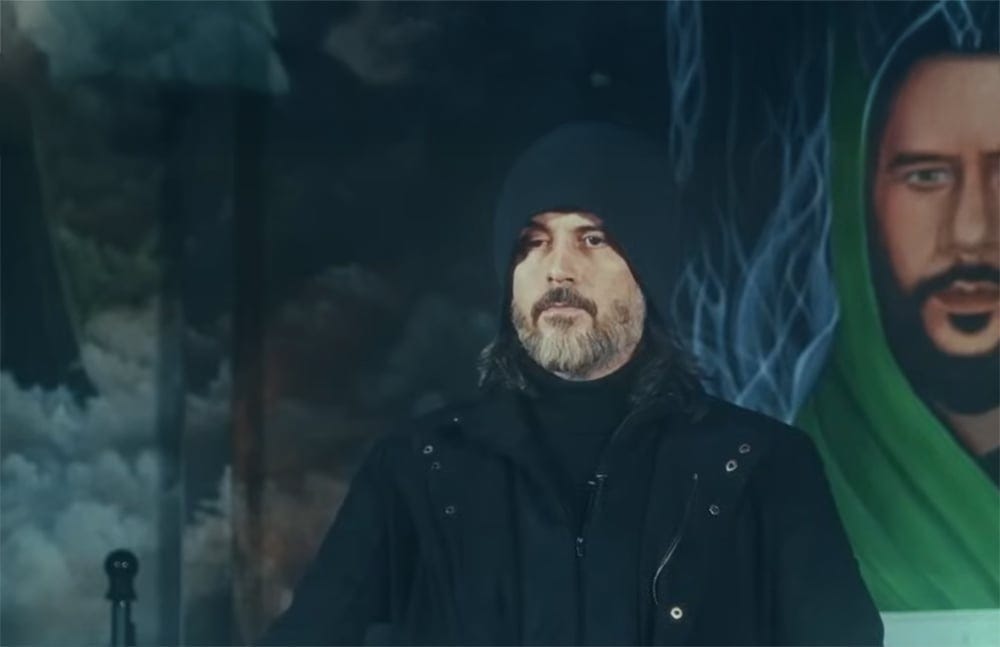
In 2022, Abdullah Hashem published The Goal of the Wise, the official gospel of the religion (Arabic: غاية الحكيم) it has been translated into Arabic, Urdu, Spanish, French, German, Turkish, Azeri, Persian, and other languages, although reviews of the book are definitely on the do not recommend side of things. In response Wahid released his counter to this book The Goal of the Unwise, which you can read for free at his academia account.
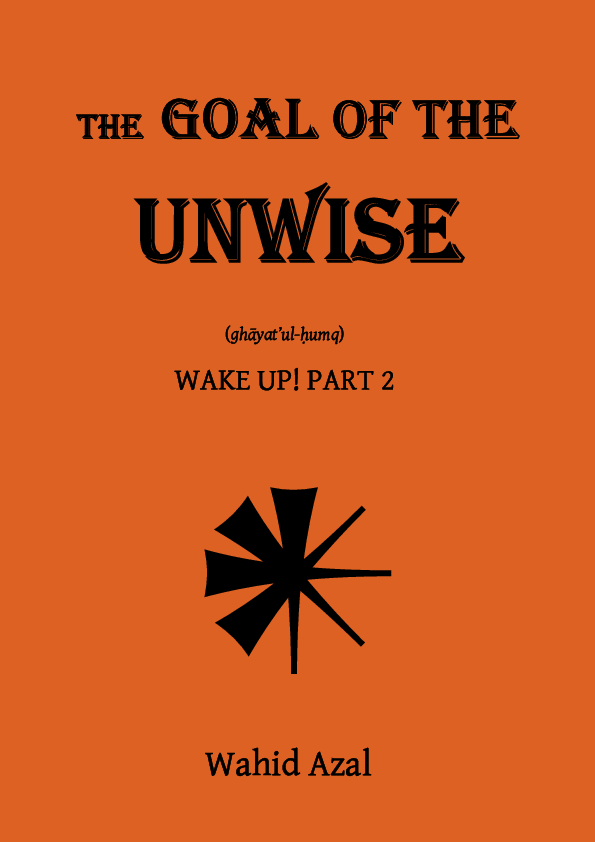
Azal is correct on several doctrinal points in his criticisms, such as the AROPL’s teachings on reincarnation, its syncretic blending of Shia, ancient Egyptian, and even Catholic elements, and Hashem’s claim to personal infallibility do represent sharp departures from traditional Twelver Shia and Bayani norms, making the group heretical by those standards.
However , Azal quickly overreaches into unsubstantiated conspiracy territory—alleging that the AROPL was deliberately engineered and financed by CESNUR, the Vatican, and Western intelligence as a “Sabbatian-Frankist” operation to destroy Shia unity. These claims rest on hallucinatory numerology, apocalyptic rants, and occasional veiled threats rather than evidence, turning what begins as legitimate theological critique into fringe polemic that undermines its own credibility. Much like his Baháʼí-Islam replacement theory we discussed earlier, the claims seems to be largely rooted in a competing bid for Messiahship, ‘There can only be One!’
Bringing attention to these theological matters, will likely increase the persecution of the AROPL in Iran. In Iran, members of the Ahmadi Religion of Peace and Light face arbitrary arrests, home raids, and detention in facilities like Evin Prison, often accompanied by physical assaults and threats of execution for charges such as denigrating Islam or apostasy. Detainees are frequently subjected to torture, psychological coercion to renounce their faith, and forced public denunciations, while the regime conducts surveillance, produces slanderous propaganda, and pressures families to report adherents as traitors.
As Diplomat and freedom of religion advocate, Rosita Šorytė, has noted in a Bitter Winter article, :
According to Azal, as it now allegedly does for AROPL, CESNUR reportedly acted as an “umbrella patron” for the terrorist new religious movement Aum Shinrikyo, working to destabilize the Japanese government and society on behalf of the Vatican and the CIA. Additionally, CESNUR was purportedly involved with an unnamed Czech cult associated with “pedophile, child, and sex abuse,” which seems to refer to The Path of YahRa, aiming to apply similar pressure on the authorities in that country (Azal “The Goal of the Unwise [ghāyat’ul-ḥumq]. Wake Up! Part 2,” Eastern Coast [Brisbane], Australia: Library of the Greatest Name, pp. 30–1; hereinafter quoted as “Goal”). CESNUR is claimed to “ensure that such cults—as a pressure tactic—execute their destabilization activities in those countries as proxies” (“Goal,” p. 31).
…Azal explains that “given the kind of depraved sexual, physical, emotional and violent abuses that such cult proxies [of CESNUR]regularly perpetrate—crimes which AROLP [sic]itself is accused of—this in itself can be framed in occult ritualistic terms as a sort of postmodern Sabbatian-Frankist mass ritual of desecrating the sacred” (“Goal,” p. 31). Azal writes that the Vatican and the United States annihilate their enemies through such esoteric rituals.
He is also an occasional poet, and he nicely summarizes all of this in a poem:
“The [Catholic] Church and CESNUR play the long deceit, And crush their foes through frontlines at their feet! Abū’l-Kāẓib [AROPL’s founder Abdullah Hashem] is but their puppet face, A ploy to shatter Shiʿa’s sacred grace!” (Goal of the Unwise, p. 36). (Šorytė, 2025)
Šorytė’s response to this is “Aum Shinrikyo was founded in 1987, before the establishment of CESNUR… CESNUR has only been involved with the AROPL since 2023, and …Azal misinterprets AROPL’s theology. However, these objections overlook a crucial point… Azal’s ideas are not grounded in facts. Instead, they mainly stem from mystical revelations… Countering Azal’s claims with factual evidence is akin to critiquing a fantasy novel about dragons and elves by objecting that such creatures lack documentary support. AROPL and CESNUR scholar Massimo Introvigne counter-label him a “mad Sheykh” and “New Age anti-cultist.”
In typical bombastic style, posted a response article to CESNUR and the Bitter Winter articles about him, When an Opponent Makes You a Banner: How CESNUR’s Bitter Winter Effectively Elevated Me as the Focal Point of Its Global Opposition:
…CESNUR did more than rebut an argument (which it didn’t). It followed a well-known play in narrative warfare: elevate one antagonist, define the field through that antagonist, then mobilize audiences around the conflict. The outcome is paradoxical but predictable: by attempting to delegitimize me, CESNUR effectively promoted me to the role of primary, unified face of its global opposition.
…Rosita Šorytė’s criminally actionable and defamatory pseudo-intellectual diatribe only reinforces the fact that… I have unequivocally won the argument against AROLP and CESNUR both; and in this there is no coming back from the now entrenched truth that they have categorically ceded the intellectual, philosophical and theological ground completely… they have lost. (Azal, 2025)
Well, in Wahid’s mind at least….
The Great and Powerful Bábaloo himself, Wahid Azal in a recent photo
Is Wahid Azal an Antisemite?
Let me be clear here, with the Genocide and War Crimes of Israel ever present, there has been a rise of anti-zionist sentiments, but everyone save for rabid zionists, see this as separate from anti-semitism, and are careful to distinguish the two. In facts, some of the most outspoken people against Zionism, are themselves Jewish, Ilan Pappé, Gabor Maté, Norman Finkelstein, Bernie Sanders and Jon Stewart all come to mind, as well as thousands of protesting Orthodox Jews. Wahid, has crossed the line from justifiable anti-zionism, into full blown anti-semitism.
Image from the article ‘Jews opposing Israeli attacks on Palestine praise South Africa’s ‘brave stance’ against genocide’
Wahid asks in a now deleted Reddit comment screen captured below, with a selection of other racist comments he has made: “Why is it anti-semitic to notice that the ‘Protocols of the Learned Elders of Zion’ are accurate? Even if the Protocols are fake, they describe the behaviour of the tribe so well that they had to be banned”. In response to a post ‘Jew claims Holocaust was the greatest tragedy in human history’, with the comment “He mis-spelled ‘comedy’”.

Reddit captures of Wahid Azal’s now deleted racist and antisemitic comments. Image from the The Fourth Revolutionary War Blog
Wahid’s endorsement of the conspiratorial view of The Protocols of the Elders of Zion, which were published in 1903, are generally considered a forgery of antisemitic black propaganda purporting to detail a Jewish plot for global domination. He draws from the ideas of far-right esoteric writer Julius Evola, arguing that even if the document was “materially forged,” it remains spiritually or essentially accurate and reveals an ongoing “occult war” waged by Jews against non-Jews. This position is documented in academic and monitoring sources tracking fringe anti-cult and esoteric movements, where Azal’s statements on the topic are cited as part of his broader adoption of Evolian traditionalist and antisemitic frameworks. No direct primary quotes from him appear in publicly indexed web results, likely due to much of his output being on obscure blogs, private forums, or deleted social media posts, but the attribution is consistent across critical analyses of his ideology. In the following video, he reiterates that even if materially forged, ithe Protocols are reliable in their content and documents the “occult war” of “Jews against all non-Jews.”
And as noted ealier, he has related other antisemitic ideas, such as claims of a hidden “Sabbatian-Frankist” Jewish elite infiltrating institutions like the Vatican and CIA to wage covert operations against Islam and others.
Wahid Azal vs. the Maryamiyya Sufi order
In 2016, N. Wahid Azal published an article in CounterPunch, now removed, but reposted on his academia.com page titled “Sufism in the Service of Empire: The Case of the Maryamiyyah,” levelling serious unsourced accusations against the Maryamiyya Sufi order founded by Frithjof Schuon. Azal claimed the group betrayed authentic Sufism’s anti-colonial roots by aligning with Western imperial interests, citing alleged ties to the CIA, U.S. neoconservatives, Gulf monarchies, and figures like Seyyed Hossein Nasr, Alexander Dugin, and even Prince Charles. He further alleged the order orchestrated the murder of occultist René Guénon in 1951 to eliminate rivalry, ran a secretive “Naqshbandi Army” in Syria, and engaged in scandalous practices, including Schuon’s involvement in pedophilia, pederasty, and cult-like rituals—claims presented as explosive revelations but relying heavily on hearsay, anonymous sources, and unverified documents.
The articles quickly drew sharp rebukes, with critics highlighting their lack of credible evidence and sensational tone. Traditionalist scholar professor Mark Sedgwick, in a blog post, CounterPunch attacks Maryamiyya, described Azal’s work as a partisan “attack” rather than rigorous scholarship, noting the reliance on rumor and the scarcity of verifiable sources amid the order’s controversial history. The CounterPunch piece was even pulled shortly after publication following complaints, including from one of Azal’s own cited sources who disavowed the claims.
Islamic studies professor Alexander Knysh, quoted in Sedgwick’s blog, stated “Azal’s… arguments, including his references to the ‘Naqshbandi Army’ and the role that Sufis allegedly play in the anti-Asad insurgency, are, in my view, nothing but at attempt to gain cheap notoriety. In this he has definitely succeeded. A. Knysh”.
Sentiments that were echoed in the rightwing, partly satirical account in The 4th Revolutionary War Blog post ‘What if God is a Troll? | The Mendacity of N. Wahid Azal’, which portrays them as fabrications from an unreliable author with a history of personal vendettas and eccentric beliefs. The response framed the allegations as not just baseless but deliberately deceptive, undermining any legitimate debate about the Maryamiyya by veering into conspiracy-laden paranoia, ultimately discrediting Azal and reinforcing defenses of Schuon’s legacy among traditionalist circles.
Criticisms of the article at The 4th Revolutionary War Blog, resulted in the typical ‘I’m gonna sue you’ threats from Azal, which have become as common as Wahid’s accusations of pedophilia, as we have seen:
You have claimed here that my initial article published by CounterPunch in November 2016 was unsourced. Other than one source who did not wish to go on record with their name, the augmented version of the article names all of its sources by name one by one.
Are you willing to amend that information now? Because if you aren’t prepared to that, you be informed that,when I obtain a court order against your site here, WordPress will be obliged by law to also disclose to me all your personal details with which you have registered this site — name, location etc — and I will publicize that information all over the internet as well as come after you personally for any/all damages. (Wahid Azal, 2016)
As per usual, no court case evolved from any of this.
A Pederast Sufi?
Curiously, considering the numerous accusation lodged by Wahid of pedophilia, he has expressed with pride the admission into his order, an individual long accused of being a pederast, for good reason.
Inspired by some of my writings and translations of Bayānī texts, in 2019 PLW formally requested to enter the Bayān and was simultaneously made an honorary member of the Fatimiya Sufi Order. (Wahid Azal, 2020)
Peter Lamborn Wilson (1945–2022), better known by his pseudonym Hakim Bey, was an American anarchist writer, poet, and essayist most famous for his 1991 book T.A.Z.: The Temporary Autonomous Zone, Ontological Anarchy, Poetic Terrorism. His work explored themes of mysticism, Sufism, historical “pirate utopias,” and anti-authoritarian “zones” of temporary freedom. However, he has long been dogged by accusations of pedophilia—not for proven acts of child sexual abuse (no criminal charges or convictions were ever filed against him), but for his explicit public advocacy and writings defending adult-child sexual contact, often framed as a form of “liberation” or “ontological anarchy.”
I had corresponded in the past with Peter Lamborn Wilson, (aka Hakim Bey) myself, as he was an expert in Islamic mysticism, and wrote a book about the role of cannabis in the Islamic World, Orgies of the Hemp Eaters. He in return expressed his own interest and appreciation in my works, which he was familiar with. I became disenchanted when I read Wilson’s account of nazar ill’Allah (or sometimes spelled nazar ila’llah, Arabic: نظر إلى الله), which literally translates to “gazing upon God” or “gazing toward God.”
In certain esoteric Sufi and Persian mystical-poetic traditions (especially in the context of medieval Persian literature and dervish practices), this was a contemplative practice where an older mystic or shaykh would gaze with intense spiritualized desire upon the face of a beautiful young boy (an amrad or shāhid), seeing in that transient, ephemeral beauty a reflection or manifestation of divine beauty. The physical attraction was deliberately transmuted—or claimed to be transmuted—into a theophanic experience: the boy’s beauty became a “witness” (shāhid) to God’s own beauty.
Under the name Hakim Bey, Wilson wrote about seeing a boy he desired playing with friends, and he described focussing his desire and attention on the child, untill he got his attention returned. This seemed rather predatory for someone who practices occult arts to me. I expressed this to Lamborn Wilson, and are correspondence ended.
Key elements of Lamborn Wilson’s advocacy for pederasty include Contributions to NAMBLA: From 1985 onward, Wilson wrote poetry, essays, and articles for the NAMBLA Bulletin, the newsletter of the North American Man/Boy Love Association (NAMBLA), a now-defunct group that promoted “intergenerational sex” between adult men and boys. Examples include pieces romanticizing “sacred pederasty” in Sufi traditions and portraying such relationships as poetic or spiritual freedoms. Critics, including former friend and novelist Michael Muhammad Knight, described this as “a child molester’s liberation theology” targeted at potential offenders: Zine for Youth: In 1989, he edited Wild Children, a zine soliciting submissions from those “17 and under” on topics including “sexuality & love” and “anarchy,” which raised alarms about grooming or normalization; Thematic Ties to TAZ: Detractors like Robert P. Helms argue Wilson’s core concept of Temporary Autonomous Zones (TAZ)—short-lived spaces free from societal control—was partly inspired by and could enable pedophilic encounters, creating “Neverlands” for exploitation. His writings often blurred lines between pederasty (adult-youth relations) and pedophilia, sometimes distinguishing them but ultimately defending both as anti-authoritarian acts; Other Works: Novels like Crowstone (1983) were marketed as “sword and sorcery boy-love tales,” and essays in TAZ include uncomfortable references to children in erotic or “autonomous” contexts.
These elements have led many in anarchist, literary, and academic circles to label him a pedophile apologist, with some (e.g., on Reddit and libcom.org) extending it to calling him a “pedo” outright due to the predatory undertones. Wikipedia categorizes him under “Pedophile advocacy,” alongside figures like David Thorstad. At least one fan, Harold Spurling (aka Aztram), was convicted of child sexual abuse (including an infant) and cited Wilson’s writings approvingly.
In response to accusations of pederasty, Wahid weakly suggests this may have been Wilson “LARPing his association with NAMBLA, etc., as a means to ward people off turning him into an actual guru, or wasting his time”. In an article written after Lamborn Wilson’s death, Wahid Azal explained:
I am of the mind that this latter feature may have possibly been a qalandarī and malāmatī form of warding off people and preventing himself from becoming a guru and unnecessary focus of adoration by bringing blame upon himself as an initiatic act: adoration which has sometimes corrupted even the best and erected turbid veils due to the cultivation of the base ego. (Wahid Azal, 2020)
Azal insists that pederasty does not “jibe with the Bayan” but also notes that traditional “age of maturity in the Bayan is 11 years of age; and where indigenous coupling is concerned… many of the conventions of the West do not apply”. Considering Wahid identifies himself as the current leader of this tradition, his desire to curtail that age limit is not mentioned, and he seems to defend it on cultural grounds. He states that in regards to pederasty “that specific element is not kosher with us… this in itself is also not any bar in entering the Bayan.” (Wahid Azal, 2020).
Wahid wrote fondly that “in a sense I feel his acknowledgement of myself, the Bayān and the FSO [Fatima Sufi Order] was a sort of passing of the mantle… Peter was 77 years old, i.e. the abjad numerical value of Yā Allāh (يا الله), and he was considered by me a Letter of the NUR. The Light of the All-High be upon him in every moment, before every moment and after every moment! (Wahid Azal, 2020)
Tragedy unfolds: The Death of Roya
Before continuing with this next part, and Wahid if you are reading, I don’t want to downplay the devastation that takes place when one loses a loved one, not even here. This was a tragic event, no matter how you look at it, and Wahid has my deepest consolations in that regard.
That said, Wahid has made himself a point of scrutiny, with lofty claims of divinity, as well as his harsh criticism of other people and groups. I believe this account reveals elements of what can happen, when ‘paranoid delusions, meet tragedy.
Wahid’s tragically lost his wife Roya Pirayesh (also referred to as Kirsten Roya Azal or Roya Jakoby in some contexts), a German woman who died in her sleep in Berlin on the night of March 11–12, 2019, at age 51. He firmly believes she was murdered.
Azal asserts the death was not natural but a targeted assassination (likely via “clean” poisoning mimicking a natural cause), executed possibly by far-right networks (e.g., AfD-aligned, pro-Russian/Duginist elements with ex-intelligence ties) and/or with the knowledge, consent, or convergence of interests from the global Bahá’í organization (specifically the Haifan Bahá’í administration). Motives allegedly include:
- Silencing Azal’s theological critiques and activism as a prominent Bayānī (a minority offshoot related to Bábism).
- Retaliation for his and Roya’s anti-fascist work.
- Causing him emotional collapse and destabilization.
We’ve gone over a lot of Baháʼí material, and I’ve never seen anything indicating they would plot Wahid’s or his wife’s murder. He has also suggested that his activity with ANTIFA may have played a role.
In regards to his claims of a potential assassination from the German Right, he ties this with his role as an ANTIFA activist. He has explicitly stated things like: “My credentials as Antifa [are]long and well established.” Threatened opponents with “several Antifa fists and boots” or referenced “hackers from Antifa Germany.” Described his late partner Roya Pirayesh as a “lifelong Antifa activist” with a background in leftist/anti-fascist circles in Germany.
However there is no verifiable evidence—from news reports, German Antifa networks, court records, police files, activist accounts, or third-party sources—that he has ever participated in street actions, black blocs, doxxing operations, protests against far-right events, or any of the typical activities associated with Germany’s decentralized and often-monitored Antifa scene, either in Berlin or elsewhere. His name simply does not appear in any known Antifa-related context, positively or negatively. Instead, his self-identification as “Antifa” emerges almost exclusively in heated online exchanges, where it serves as a rhetorical shield to bolster his radical-left credentials or intimidate critics (such as ex-Bahá’ís, academics, and bloggers).
He gives the details on the death in a blog entry Who Killed Roya?, His case here hinges on a claimed toxicology report, that you would think he would have attached as proof to make his case, but alas, we are left with Wahid’s own words here again. The official cause of death was listed as a diabetic stroke. Wahid here states that “The official toxicologist report later contradicted this” and “The family GP called the coroner’s report ‘bullshit’ and pointed to a clean February 2019 bloodwork of Roya’s.”.
Wahid claims:
- The official coroner’s cause (”diabetic stroke”) was fabricated.
- Roya died suddenly without prior health issues.
- Toxicology and recent bloodwork showed no diabetes (her GP allegedly called the report “bullshit”).
- the Berlin Staatsanwaltschaft stonewalled release of full reports until he complained to the BKA (German federal police).
- Only after a formal complaint by me to the BKA did the report get released.
- BKA investigators reviewed evidence, hinted at possible poisoning, and specifically asked him if he suspected Bahá’í involvement in murder — but said only a court could override the coroner (costing €30,000+, which froze the case).
- No autopsy irregularities or cremation issues are detailed beyond the disputed report.
No publicly available police reports, court filings, autopsy details, obituaries, news articles, or official records corroborate (or even mention) foul play, murder suspicions, poisoning, Bahá’í involvement, far-right assassination, or any investigation beyond a standard sudden-death procedure in Berlin.
- Searches for “Roya Pirayesh” + death-related terms (obituary, autopsy, police, inquest, murder, etc.) yield zero relevant results for a 2019 Berlin case.
- The name sometimes confuses with unrelated cases (e.g., a 2023 drowning of an Afghan immigrant named Roya Mohammadi in the US, or various Iranian protest-related deaths), but nothing matches the 2019 Berlin timeline, location, or details.
- Azal’s own past online posts (e.g., emails he shared publicly around the time) announce her sudden passing and funeral arrangements but do not raise murder allegations at that stage — those appear years later in his writings.
German sudden deaths in the home (especially with no obvious trauma) routinely involve a coroner’s examination and toxicology if warranted, but if ruled natural/undetermined with no suspicion, they close quietly without public disclosure (per privacy laws). There is no evidence the case was ever classified as suspicious by authorities, escalated to homicide, or generated any media coverage.
Wahid’s claims of Murder
In Wahid’s view this “suggested possible poisoning but …only a court could overrule the coroner’s report – a process requiring upwards of €30,000 in legal fees. This is where the case froze.” You would think evidence of a poisoning in a toxicological, in a case of death, would draw police attention. But apparently they did not have the same sort of suspicions as Wahid did. As Wahid recounts it:
A few months later, the BKA’s [German Police] own investigators, when confronted with the evidence, asked a startling question of me: ‘Do you suspect the Bahá’ís were involved in Roya’s murder?’
This question, which anyone with even a brief look into Wahid’s past might come up with in response, adds to the paranoia of conspiracy! Wahid from there claims he was being targeted by either the Baháʼí or Rightwing forces in Germany, where all this was taking place, because “Roya and I were active in Antifa networks.”
Wahid provides no verifiable evidence (e.g., scanned reports, BKA correspondence, witness names) — only his personal interpretations and anecdotes (e.g., the alleged BKA question about Bahá’ís, which, even if true, could reflect routine elimination of leads rather than endorsement of a theory).
His broader narrative fits a long-standing pattern in his public output: elaborate persecution claims centering on himself as a singular target of powerful global forces (Bahá’í institutions, intelligence agencies, far-right networks, etc.). Independent observers (including critics from various religious/esoteric communities) have frequently described his rhetoric as conspiratorial, delusional, or paranoid — often involving accusations of murder, assassination plots, or occult warfare without substantiation.
In this specific case, the complete absence of any third-party corroboration (news, legal records, family statements from Roya’s side, etc.) over 6+ years strongly suggests the murder/cover-up claims are not accurate. They appear instead to reflect grief compounded by pre-existing persecutory ideation and paranoia, rather than grounded in evidence of foul play.
Official details from the 2019 German coroner’s report and BKA inquiry (not publicly available due to privacy laws) indicate natural causes: a stroke linked to long-term diabetes, with no evidence of foul play. This contradicts unsubstantiated poisoning claims (e.g., Azal’s “Who Killed Roya?” Substack, 2019). Community statements from ex-Bahá’í networks at the time echoed the medical findings.
Sudden deaths from undiagnosed conditions (e.g., cardiac events, strokes, or undetected metabolic issues) do occur in apparently healthy middle-aged people, and discrepancies in initial vs. final medical opinions are not uncommon without implying conspiracy.
In short: Nothing publicly available supports the article’s central allegations of murder or institutional cover-up. The claims read as classic signs of paranoia/delusion in the context of Azal’s documented history, rather than credible or evidence-based. From my view, based on what I have read, I think Wahid has demonstrated that he is more likely to blow up a building belonging to the Haifan Baháʼí organization, than the BBaháʼí are to put out a hit on him, or, as he has also put forth, send sexy female spies to seduce him…..
Femme Fatales and the Rock of Truth
Elements of paranoia certainly seem present, when Wahid tells the accounts about romantic trysts that ended badly after Roya’s death:
In late November–early December 2023, a Turkish woman from Izmir, Turkey contacted me via Facebook, feigning romantic interest. She also claimed to be a Sufi-adjacent individual. Though the relationship remained virtual and brief (lasting 36 days), she bore a striking resemblance to the woman depicted in the Eve card of the NUR Tarot, as illustrated by Habib Shahbazi. This synchronicity caused momentary spiritual reflection despite lingering doubts about her sincerity. The encounter ultimately ended abruptly, yet I used it as material for refining the symbolism of the Eve card within my NUR Tarot system.
(He gives a much more detailed account of the Turkish Woman in a blog post, suggesting for a time she was used by the Goddess as a vessel of communication with him.)
Subsequently I was repeatedly targeted by false spiritual actors, culminating in 2025 with the R. incident – a local psychotherapist posing as a Sufi. Throughout my personal conversations, and although claiming to be a Lebanese ꜤAlawite by pedigree; R. consistently defended the Bahá’í faith, challenging my theological critique and almost gaslighting me by attempting to undermine my perspective from the outset. This defense of the Bahá’í position began during the very first exchanges, raising serious concerns about her true affiliations and underlying motivations.
Wahid began to suspect she had been sent to spy on him, which he described as an “Attempt to confuse my inner compass, which she also abjectly failed in doing” :
It was interesting that when I looked her in the eyes in my flat on Wednesday, 25 June 2025 and asked her point blank ‘did the Bahá’ís send you’, she did not give me a straight yes/no answer, with the look of panic in her eyes instead responding with ‘what do you think?’ to which I dropped my head and gave an evasive ‘no’, knowing full well at the time that she was clearly prevaricating. At the time, I did not want to rock any boats with her just yet because first I wanted to pull her into my own physical occult space to have the powers working through me provide me with that answer, which they did with crystal clear clarity in less than 48 hours. Later that day, just before she left, I gave her a significant ritual rock to hold in her hands in that very space – one theurgically charged and with a potent indigenous history of its own – which literally sealed her fate in that regard.
So maybe its that Wahid is in possession of the “stone of ultimate truth”
or maybe he’s suffering from a delusional paranoia, either way, the desire for petty revenge is ever present here as well.
Her miscalculations and subsequent outmaneuvering by me, then her abrupt silence following her public exposure and documentation indicates operational collapse. The pattern reveals a failed infiltration attempt designed to entrap and silence, but one in which the attempted entrapper became the effectively entrapped. However, this part of the story is not over yet, since there are legal implications involved which are being presently set into motion and explored, beginning with a formal complaint by me to the office of the Australian Inspector-General of Intelligence and Security (IGIS) together with an update to the Queensland Human Rights Commission (QHRC) in an ongoing case against Meta.
All of which, I am pretty sure, will amount to nothing.
Note: In regards to ANTIFA claims, it should be noted that Wahid has called for a militant approach to things in the past, and I have no clue what he might have been up to behind the scenes, but the following screen capture does give some indication of why he might get the attention of the authorities in that regard:
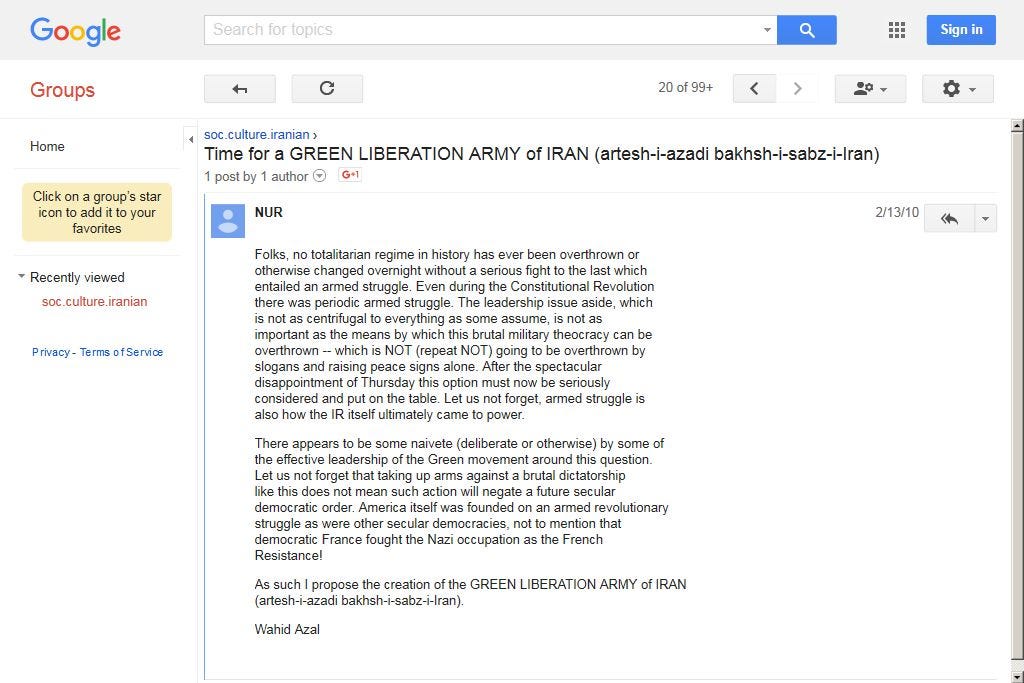
Image from the The Fourth Revolutionary War Blog
Sacred Plants and Sufis
The Fatimiya Sufi Order (also rendered as Fāṭimīya or Fatimiyya) was founded in 2005 by N. Wahid Azal, who serves as its current Grand Shaykh. Azal established the order following a pivotal entheogenic experience with ayahuasca that year, during which he received the foundational vision, which he described as follows in a Reality Sandwich Interview:
The Fatimiya Sufi Order was born within an ayahuasca experience I had in mid 2005. In this session La Madre –– whom in its Fatimiya context is referred to in its Iranian denotation as the Simorgh, the Fabulous Gryphon — epiphanized for me as Fatima Zahra’, Fatima the Radiant, namely, the daughter of the Prophet Muhammad. She gave me the directive within this session to begin the (capital ‘W’) Work of the Fatimiya. Most importantly it was in this session where She revealed in Arabic the Fatimiya formula of the shahada, translated as “testimony,” and made me utter it thirteen times, which is la ilaha illa allah fatima wajh allah, “there is no god but the Godhead, Fatima is the Face of the Godhead.”
Years before, however, and specifically on the night of my Sufi initiation, I had dreamed of Fatima who had likewise initiated me in the Mundus Imaginalis, or the Imaginal World. I dreamed I had entered the sacred precincts of the Ka’aba, in Mecca, on a Night of the Full Moon and there was no one there but me. The doors of the Ka’aba suddenly opened up and a female voice bade me to enter the inner sanctum of the Ka’aba. I entered the Ka’aba and there seated dressed in emerald green and wearing a white headdress, with the words Al-Hayy, translated as “the Living” written in Arabic on the headdress, was Fatima.
She bade me to sit in front of Her and then commanded me to open my mouth. Laying next to Her was the double-edged sword of ‘Ali, Zu’l-Fiqar. I opened my mouth and She grabbed my tongue and pierced it with Zu’l-Fiqar. Instead of pain, however, I felt ecstasy and was transported in the next scene of the dream to a dazzling desert landscape whose sands consisted of flakes of pure lustrous gold. I stood in this desert watching the sun rise, and as the sun rose Fatima’s face shone from within it fully unveiled. The higher this Imaginal Sun rose to its meridian, the more it formed itself into various shapes and forms, until it finally became the World Tree, the Tree of Life, or the Tree of Reality as I call it, whose roots reached into every expanse of Heaven and earth. I woke up! This was some 13 years or so before the Ayahuasca session just mentioned and it was such a vivid dream I can never forget it! (Wahid Azal, 2016)
Here Wahid, extended his role from just the inheritor of the Bayán Tradition, and names himself a “Sheikh” extending his name as “Shaykh al-Hajj Nur Wahid Azal” a title he gave himself and adopted unilaterally in the 2020s. No recognised Sufi tariqa (Sufi community that teaches the path) would give him ijaza (a formal license or certification in Islamic and sufic circles that grants the holder permission to teach or transmit a specific tradition).
Positioning itself as a post-Islamic, syncretic esoteric movement rather than a traditional tariqa (Arabic: طريقة, literally “way,” “path,” or “method”) with historical silsila (Arabic: سلسلة, literally “chain”) the order centers on the veneration of Fatima al-Zahra as the supreme theophany of the divine feminine. Its theology, termed NUR (”light”), integrates syncretic spiritual path blending elements of Shi’ite gnosis, Bayáni teachings, Ismaili esotericism, Suhrawardian Illuminationism, Kabbalah, shamanic elements, Tantra, Tibetan Buddhist influences, shamanism (including advocacy for ayahuasca and other psychedelics), and influences from figures like Ibn Arabi and Aleister Crowley. while emphasizing ongoing personal revelation over dogmatic closure.
A defining innovation under Azal’s leadership is the ritual use of entheogens—primarily ayahuasca and haoma analogs—as core sacraments for accessing the imaginal realm (’ālam al-mithāl) and facilitating alchemical transformation toward becoming a “homo angelicus” (angelic human) in union with one’s celestial syzygy. “All existence is theophany and every theophany reflects a form… to the intelligence of the heart which is its mirror and the locus of its manifestation” (Azal, 2016). Azal’s X (Twitter) posts and YouTube videos describe ritualistic states during prayer (salāt) enhanced by psilocybin, leading to fanāʾ (ego-annihilation) and divine presence. A 2023 post notes: “If you have a fanāʾ experience within the salāt then… you have also fulfilled the quintessence of the salāt by coming to the Divine Presence within your mind via the shrooms.”
Azal teaches that these substances may have catalyzed ancient revelations, including the Bābis. In a recent, now deleted comment in response to Part 1 of this 2 part series, Wahid wrote “The Bayán bans intoxicants for the masses but permits gnostic sacraments for the elect”. Azal frames this practice as reviving pre-Islamic Iranian and esoteric Shi’ite precedents.
The order’s activities remain small-scale, decentralized, and primarily private, with a modest online footprint through blogs, archived texts, podcasts, interviews, and occasional social media. Core practices include the distinctive Fāṭimīya ṣalāt (a reoriented daily prayer ritual), dhikr invocations focused on the divine feminine, and supervised entheogenic ceremonies. Based partly in Australia with sporadic international connections, the group envisions eventual leadership by female shaykhas and maintains a focus on experiential gnosis and inner transformation.
As of late 2025, the Fatimiya Sufi Order operates on the margins of contemporary Sufism and entheogenic spirituality, with no large institutional presence or widespread following. To date, Azal has never published a list of members or initiates other than himself and it seems to be non existent beyond one or two online posters. However, it continues to attract interest in psychedelic and esoteric circles while drawing criticism for its unconventional syncretism, lack of traditional lineage, and founder’s outspoken polemics in online forums. Public engagement occurs mainly through digital media and private initiatory circles rather than physical zawiyas (a building and institution associated with Sufis in the Islamic world, serving as a center for worship, education, and spiritual retreat) or public events.
In a comment on Iranian.com, an aspiring Ayahuasquero left the following lament about his experience back in 2006 with Shaykh al-Hajj Nur Wahid Azal, and it’s a story we are all well familiar with at this point.
Dear Friends,
It is not in my nature to make such posts, but circumstances now call for me to speak up….. There is a slanderous and very disturbed individual by the name of Nima Hazini, Aka: Wahid Azal, Aramis, One, Abraxas, & etc…likely the one now posing as “Aurora Nur” in this thread. He also considers himself the “Grand Shaykh, Imám ‘Abdu’l-Haqq Wahid Azal Wahdatalishah”
He is a person of Persian birth and descent living in Australia who proclaimed himself a Manifestation of God many years ago, while still a Baha’i. When he was not accepted and refused to recant, he was shunned by the Baha’i community; and so he turned his back on Baha’u’llah and began a systematic effort to attack the reputation of any believer that he deems a threat to his ego-maniacal (and reprehensible) schemes.
He actively targets people and organizations – going so far as maintaining a “kill list” – who believe in Baha’u’llah in order to slander their reputation. He has said some of the vilest, most repugnant things (not worth repeating), and has threatened people with physical violence; anyone interested in independently ascertaining the truth can find hundreds of references online by searching his name and aliases; his exploits are extensive and precede him.
His strategy on the Internet is to start or contribute to a blog/group thread attacking someone under one of his many aliases, and then to post responses supporting his lies under another of his aliases; he does this in order to give the impression that many people share his distorted view. He then picks and chooses snippets of articles from unrelated sources and attempts to lace them into a tale that supports his delusions. Afterwards he posts links to these tall and libelous tales all over the Internet in order to create the further impression of pervasiveness for his lies. Whenever the participants of a thread containing his attacks begins to question his motives for the awful and hateful things he says, or the truth begins to prevail, he abandons the thread. Owing to the persistence of blog/group discussions these garbage threads of his are littered all over the Internet; a testament to the number and scope of his attacks on people throughout the years. The great nemesis in his mind appears to be the Baha’i Faith in Haifa who he associates with anyone that does not agree with his view that he is the Manifestation of God of the day for of all humanity.
Though in the most recent ‘version of himself’ he fancies to be an Ayahuasquero and medicine man, this is the farthest thing from the truth. He is in fact a complete and total impostor who knows nothing of the indigenous medicine ways and represents the very antithesis of a medicine person. He has no lineage, elders, initiation or training in any of the indigenous traditions of the Americas…and there is not one single reputable elder of the Americas that supports him or his views. He is of the camp of Psychonauts and Neo-Shamans abusing drugs and appropriating traditional indigenous medicines without regard to the protocols of training and initiation.
He published a book of his purported ‘revelations’ in 2006 which was poorly received; and having failed once again at establishing himself as a Prophet of God he has taken to attacking even more vehemently any believer of Baha’u’llah; of whatever persuasion. One only need to cross-reference his supposed inspired revelations with his vile and slanderous rhetoric to know that this individual is seriously psychologically unstable and pathological – much less an inspired prophet of the Creator.
The truth is that out of naivety and carelessness, I made a great error. Back in 2006, just prior to the publication of his book, Nima and I had a brief communication, where-in he took me into his confidence and asked me to translate a letter sent to him from Spanish into English – which I did. In the letter he was challenged to submit to a psychological examination. After this I did not communicate with him again despite his many efforts to bait me into dialog. It was not until the tribe.com post cited above – started/written by none other than Nima Hazini under his aliases ‘Aramis’ and ‘One’ – that he resurfaced and wherein he began his slanderous campaign against me and the Spiritual Society Aurora Baha.
I felt it important to now make these facts known so that sincere individuals who crossed paths with his various threads would have more information at their disposal to investigate and know the truth.
Although I play an integral role in Aurora Baha, particularly as a Curandero (healer), the Society is much broader than myself and includes the participation and membership of many great, sincere and wonderful souls who love God and seek to serve and uplift humanity. I write this now for them as well for they have loyally defended me from these fallacious assaults for some time while I remained silent.
It goes without saying that the Spiritual Society Aurora Baha has nothing to do with any “Operation Condor” (whatever that is) or any activities outside its clearly stated Covenant published on its website; it is a Society exclusively dedicated to the erection and operation of Universal Houses of Worship and its sacred dependencies in order to help bring about the inevitable illumination of humankind.
Sincerely,
Lobo Siete Truenos
Conclusion
What begins as a simple question — can we trust a a jpeg of a fatwā, and its interpretation circulated by just one man? — ends in a labyrinth of fractured lineages, messianic proclamations, death threats, false pedophilia accusations, conspiracy theories about Bahá’í assassins and Vatican-cult psy-ops, and a seemingly tiny online Sufi order. Over three decades N. Wahid Azal has reinvented himself from disaffected Bahá’í teenager, Nima Hazini to Bayānī messiah, Wahid Azal, the Antifa militant, persecuted Bayán Gnostic master, and finally post-Islamic psychedelic sheikh — leaving behind a trail of banned accounts, shattered alliances, and communities breathing a sigh of relief when he moves on to the next target. The 2014 “Iranian psychedelic fatwa” is not a breakthrough document; it is the latest exhibit in a very long pattern, it is a cry for attention and a demand for authority.
After three decades of internet flamewars, banned accounts, angered as well as terrorized communities and a solitary war waged from a Brisbane apartment against Bahāʾīs, Sufis, rival messiahs, scholars, ex-friends, and anyone who ever doubted him, the answer is painfully clear. N. Wahid Azal is neither the promised Return of Ṣubḥ-i-Azal nor the living Mirror of the Bayān—he is a deeply troubled man whose private spiritual crisis metastasized into a public quarter-century tantrum. Every religious or esoteric space he has touched—Bahāʾī forums, ex-Bahāʾī circles, Sufi lists, psychedelic communities, etc., etc.—has ended the same way: with denunciations, bans, and collective relief when he finally storms off to the next battlefield.
When the world refused to bow, the mask slipped: the self-proclaimed “Living Mirror” of the Bayān, the Grand Shaykh of Psychedelic Islam, cracked and revealed himself as what friends and strangers alike have quietly concluded for years—an angry, paranoid narcissist whose messianic fantasy cannot survive the mildest scrutiny or the simplest human disagreement.