Interestingly, there was a cannabis wine infusion known as the “drync of Antioche”, which was infused with “a good handful…of femaille hempe” that dates back to at least the Crusade era. Antioch was the epicentre for Hellenistic Judaism and is also considered the cradle of Christianity, and according to the New Testament the term “Christianity” first came into use there.
As a 14th century text records:
To make drync of Antioche Take bugle, auence, strawberywyses, redcolecrop, dayse, of iche a good handful..of femaille hempe v croppes..putte alle þese herbes in a pot, and do þerto a galoun of qwyte wyn, and sethe it..do þer-to als moche of hony. –Medical Recipes in Stockholm, Royal Library 10.90, see link for more references and click ‘show all’:
The herbs were boiled together in white wine, a quart, or litre, and mixed with an equal amount of clarified honey. which aided its use as a salve. The preparation, was boiled down into a syrup, known as the “Sirup of antioche”, and further rendered into solid form becoming the “Pelotus of Antioch”, considered as the forerunner to the modern medical “pill”. It was considered a potent medicine for a variety of ailments and was often carried into the battlefield as it was considered an excellent treatment for wounds.
The 15th century English poem, ‘How a Lover Praiseth his Lady’*, gives us the following reference:
The wounded bodyes to hele and save,
Antyoche to drynk and holsom safe
Ther was als a myrrour of wonder engyne
Ipolysshed by Intellygence devyne
Interesting here, is that the reference to the drink is followed by a reference to a magic mirror. Cannabis appears in a number of 16th century English grimoires in a recipe for a salve for mirror scrying, such as Sepher Raziel:Liber Salomonis, The Book of Oberon, and A Cunning Man’s Grimoire.
John of Gaddesden, who served as the prototype for Chaucer’s “doctor of physick” character in The Canterbury Tales, recorded in his medical treatise the Rosa Anglica(1314) that such drinks injured the stomach and belonged to ‘ancient surgery’.?” A statement which indicates their more ancient history. The decline of the Antioch drink was believed to have been hastened when it ceased to be recognized specifically as a wound drink, A recipe in a manuscript of 1443/4 gives merely the general instruction: ‘Use it for all evils of the body’. However, I wonder if the decline had more to do with its use with magic mirrors, rather than as an all around medication….
Associated quotations:
- c1425 Arderne Fistula (Sln 6)45/1 : Drynk of Antioche.
- ?a1450 Þe man þt wylle (Wel 542)21 : Be þe wounde nevere so deep..So þat he drynke save or anteocke [vr. antioche], Him dar not drede of þat outrage.
- c1450 Med.Bk.(1) (Med-L 136)66/161 : A goode confeccion that is clepid peletis of antioch.
- c1450 Med.Bk.(1) (Med-L 136)276/893 : Sirup of antioche Take an handfull of dayseȝe..bugle..red cole..hemp..mader [etc.].
- c1450 When the son (Frf 16)130 : The wounded bodyes to hele and save, Antyoche to drynk and holsom safe.
- ?c1450 Stockh.PRecipes (Stockh 10.90)83/16 : To make drync of Antioche Take bugle, auence, strawberywyses, redcolecrop, dayse, of iche a good handful..of femaille hempe v croppes..putte alle þese herbes in a pot, and do þerto a galoun of qwyte wyn, and sethe it..do þer-to als moche of hony.
- ?c1450 Stockh.PRecipes (Stockh 10.90)132/34 : For to make pelotis of Antioche.
- a1500 Hrl.2378 Recipes (Hrl 2378)77/3,14 : Pelotus of antioche..The drynk of Auntioch.
- a1500 Sln.2584 Med.Miscell.(Sln 2584)128 : Balles of Antioche.
I have seen a very similar recipe in the Portfolio of Villard de Honnecourt as well,
Take leaves of red cabbage, and of avens – this is an herb which one calls “bastard cannabis.” Take a herb which one calls tansy and hemp – this is the seeds of cannabis. Crush these four herbs so that there is nothing more of the one than of the other. Afterwards you take mad- der two times more than any one of the four herbs, then you crush it, then you put these five herbs in a pot. And you put white wine to infuse it, the best that you are able to have, being somewhat with care that the potions not be too thick, and that one is able to drink them (de Honnecourt, 1230).
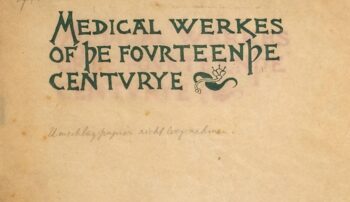
For a variety of recipes, including the ‘Drynk of Antioche’ and ‘Pelotus of Antioche’ see – Medical Works of the Fourteenth Century Together with a List of Plants Recorded in Contemporary Writings, with Their Identifications By George Henslow (1899)
There are also claims the Templar’s had a cannabis palm wine infusion, the elixir of Jerusalem, however I have not found source material from the time period. Although, the Templar were having cannabis grown in Spain by Saracens, and cannabis is listed specifically in items seized in their raids. As well there are other contemporary references to cannabis-infused wines that show up in Europe in this same time period, such as a A Treasury of Health (1277) authored by Pope John XXI (1215-1277), who was friendly with the Templars and the advancement of medical science, which he held a deep personal interest in. A Treasury of Health is described as a compendium of medieval medical knowledge “conteynyng many profitable medycines gathered out of Hypocrates, Galen and Auycen [Avicenna],” which offered some descriptive medical recipes. Both Galen and Avicienna refer to cannabis in their writings. Besides recommending the juice of hemp to take away the fever, “The ioyce of Hempe, afore the fyt taketh away the feuer” in a “remedy against a carbuncle,” Pope John XXI also recommend a cannabis-infused wine:
Remedies – Agaynst the scabe and french pokes cap. LXII
… Take of red colewortes, fengreke Percely, sothernewod, tansey, strawbery leaues, and suet, brere leaues, plantayn leaues, hempe, red- madder smallage, cransebill, Alam, nuttes, before al thynges let them be sodden together in pure whyte wyne, & put therto a lytle hony, giue it vnto the pacient early & late, and anoynte ye wound wtout when he hath dronke of ye sayd potion, & lay theron a lefe of red colewortes & keape the same contynually ouer it, it openeth it and hath ben often prouyd.
Pope John XXI’s comments coming from a time when the Papacy did not consider arts directed at the healing of the body, as distracting from the churches directive of the salvation of the soul, a view the Vatican would take in later times. I suspect this aspect also led to the decline of wound drinks and salves, as well as associations with witchcraft. Cannabis appears in the 12 century magical text Picatrix which became available in Latin, and in recipes for alchemical quintessences and arcanums from alchemists like Paracelsus. Interestingly, after his death, rumours about Pope John XXI being a necromancer began to appear, and that his death was punishment from God to stop him from completing a heretical treatise.